How Long Garage Door Spring Last? Do you ever wonder if one small part could strand your car and risk your entry? We answer that with clear facts and local support. As a family-owned team serving Davenport, FL since 2014, we explain typical life spans and real signs to watch
Industry data ties most springs to about 10,000 cycles, or roughly seven to ten years under normal use. Torsion models usually outlast extension types. Material, climate, and use all affect life.
We outline simple math you can use to estimate remaining years. We also list common clues of wear, from noisy movement to uneven travel. Safety matters: spring work needs trained techs with the right tools.
Call us for same-day garage door service and fast, friendly repairs across Polk and nearby counties. We will inspect, explain options, and get your entry safe again without surprise fees.
Key Takeaways
- Typical springs meet about 10,000 cycles — roughly seven to ten years for many homes.
- Torsion systems tend to give longer life than extension alternatives.
- Watch for noises, hard manual lifting, uneven travel, or visible damage.
- Don’t attempt spring repairs yourself; trained technicians keep you safe.
- We offer local, same-day service and clear estimates so homeowners can plan repairs.
Understanding how long garage door spring last at a glance
Counting full openings and closures gives the clearest estimate. Many manufactured coils are rated near 10,000 cycles, so tracking use helps predict remaining life.
What that means in simple terms:
- A 10,000-cycle rating usually converts to about seven to ten years under normal household use.
- Busy families with multiple trips each day reach that mark faster than quieter homes.
- Torsion models often outlive extension styles because their design spreads stress more evenly.
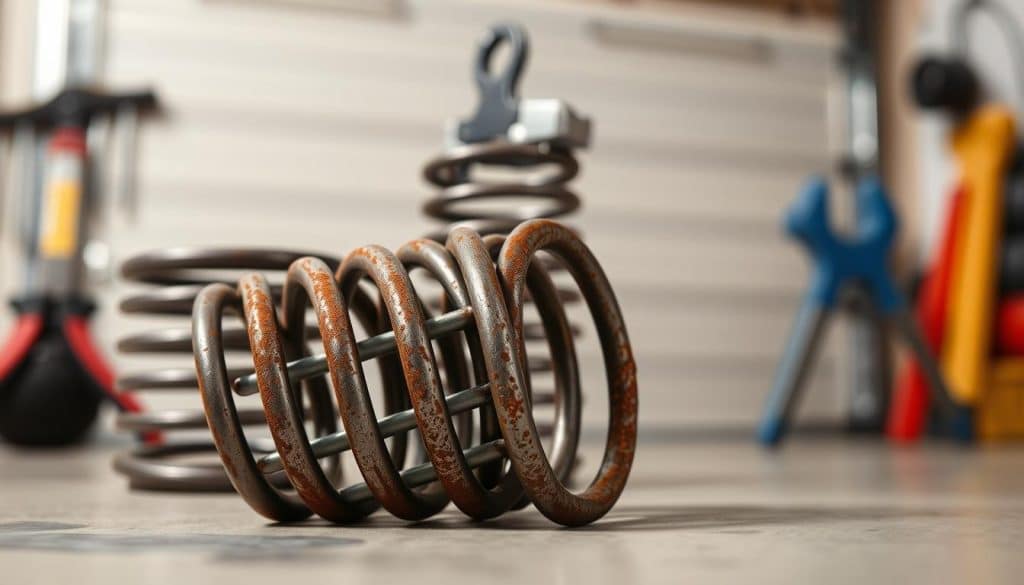
Climate and corrosion can shorten the useful lifespan. Hot, cold, or humid settings speed wear and rust. We see local patterns here that change expected years based on daily routines.
Simple steps to act: Spot noisy movement, uneven travel, or heavy manual lift? Book a safety check. Our garage door service inspects cables, bearings, rollers, and balance. We’ll measure condition and offer clear options to maintain, adjust, or replace so you’re safe and back on time.
Average lifespan of garage door springs: cycles, years, and real usage
Rated at roughly 10,000 cycles, standard coils let you predict service needs with simple arithmetic.
Quick answer: 7–10 years or about 10,000 openings
Quick answer: most factory parts carry a 10,000-cycle rating, which usually equals about 7–10 years for typical homes.
Cycle math made simple
Count how many times you use the entry each day. Multiply that by 365 to get annual cycles.
Then divide 10,000 by that number to estimate years left. For example, 3 times per day ≈ 1,095 cycles per year, so the math points to about nine years.
Why your actual years can vary
Torsion springs often outlast extension types because the twist spreads force more evenly. A heavy or unbalanced panel makes the opener and spring work harder, cutting useful lifespan.
Climate, humidity, and rust also speed wear. Squeaks, pops, or slow opening are early warnings that parts are under strain.
- We recommend a safety inspection when your math nears the average or if you see warning signs.
- Our garage door service checks spring condition, balance, cables, and rollers so you get a clear plan.
- Scheduling a check keeps repairs predictable and protects your family and vehicle access.
What makes garage door springs last longer or break sooner
Certain daily habits and local weather control how quickly parts wear. Small actions add cycles and shorten expected service time for your components.
Daily usage patterns and trips per day
High use raises cycles fast. A family using the entry many times a day will see reduced lifespan compared with light use.
Environment: heat, cold, humidity, and corrosion
Heat and humidity speed corrosion and metal fatigue. Cold can make steel brittle and increase the chance of sudden failure.
Material quality, wire size, and weight balance
Thicker wire and better steel raise rated cycles when matched to door weight. An undersized coil works harder and fails sooner.
- We measure weight and balance to confirm proper sizing.
- We test balance, adjust hardware, and recommend thicker wire when safe.
- We suggest seasonal lubrication, tune-ups, and keeping the area dry to slow corrosion.
Spot noises or slight hesitation? Early service often prevents bigger repairs. We’ll present clear options: maintain, adjust, or replace based on your garage door system and environment.
Torsion springs vs. extension springs: lifespan, performance, and value
Choosing the right coil type changes performance, upkeep, and value for your home entry system. We compare common options so you can pick what fits your doors and routine.
Torsion generally lasts longer than extension: what homeowners should know
Torsion springs twist to balance the panel and spread stress evenly each cycle. That design gives steadier motion and often more years of reliable use.
Extension designs work but have more moving parts and need containment measures. Proper wire size and matching to door weight matter for either type.
Warranty terms vs. true lifetime: parts, labor, and service
Warranties can cover parts longer than actual lifetime expectations. Labor and service charges are commonly separate.
We focus on correct sizing and precise installation because those choices affect real-world longevity more than a warranty headline.
- We evaluate wire, weight, and track to recommend the right torsion or extension option.
- Upgrades to higher-cycle torsion springs are often possible when space and hardware allow.
- Safety note: both types hold high tension and need trained handling; extension systems require containment cables.
- Call our team for a clear plan—maintenance, adjustment, or replacement—so you get the best value and fewer visits over the years.
Clear signs your garage door spring is nearing end of life
Listen for loud pops, grinding, or persistent squeaks. A sharp pop often means a broken torsion coil. Scraping or grinding can show misalignment that stresses springs and hardware.
Hard to lift or the panel won’t stay balanced
If the panel gets heavy to lift or drifts down, the door spring no longer balances the load.
This strains the garage door opener and can damage gears if ignored.
Uneven travel, sagging panels, or the panel pulling toward the track
Wobble or uneven opening and closing reveals a weakening system. That motion can pull the panel off track and harm cables, rollers, and hinges.
Slamming shut, visible gaps, rust, or cracked metal
Visible gaps in a torsion coil, severe rust, or cracks are end‑of‑life signs. A door that slams is an emergency—stop using it and call us.
- Common warning sounds: pop = broken torsion; grinding = misalignment; squeak = lubrication needed.
- Parts at risk: cables, rollers, hinges, and the opener may fail if springs break.
- Our approach: we secure the panel, diagnose the cause, and recommend immediate replacement or safe adjustment.
Call Garage Home Pros for a safety inspection. We carry parts and tools to restore safe operation and offer same‑day garage door service to keep your family protected.
How to extend the lifespan of your garage door springs
Simple, regular checks and small adjustments can add years to your system and prevent sudden failures. We focus on practical, seasonal steps you can trust.
Seasonal lubrication, balance checks, and track care
Lubricate springs, rollers, hinges, and bearings every season to cut friction and noise. Use products made for metal moving parts.
Perform a quick balance test: disconnect the opener, lift the panel halfway and see if it holds. If it drifts, call for service.
Keep tracks and rollers clean so the system moves freely. Dirt or bent tracks force the springs to work harder and reduce usable time.
Opener settings and fewer cycles
Set the garage door opener force and travel limits correctly to avoid driving against a binding panel. That reduces stress on springs and the opener.
Trim unnecessary trips when possible. Each avoided cycle adds meaningful lifespan to your springs and to the full garage door system.
- Seasonal tune‑up checklist: lubricate, test balance, inspect tracks, check cables and hardware.
- Visual checks: look for rust, gaps, or cracked metal and call us before problems escalate.
- We offer prompt seasonal service to keep your entry quiet, smooth, and safe.
Schedule a maintenance visit with Garage Home Pros to protect the lifespan of your components. Our team will inspect, tune, and recommend fixes so you get reliable performance and fewer surprises.
When to upgrade to high-cycle torsion springs
High-cycle options extend usable service by trading a higher upfront cost for far fewer replacements over the years.
What “high cycle” means: ratings above the standard 10,000 cycles. Common choices include 20,000, 30,000 and up to 100,000 cycles. These higher ratings are achieved by changing wire size and spring length so the load spreads over more coils.
Cost per cycle and value
Calculate cost per cycle to compare options. A modest upgrade can cut visits and replacement expenses over the lifetime of the system.
Engineering limits and fit
- Available shaft length and tube diameter matter for a torsion swap.
- We measure weight and IPPT to spec the correct springs and avoid mismatches.
- Upgrades may require new drums, cables, or bearings to keep balance and safe operation.
Our approach: we translate your door times per day into a cycle budget. Then we recommend the best rating and handle the replacement with precise balance checks. Call Garage Home Pros for a clear assessment and expert garage door service.
Safety first: why spring replacement is not a DIY project
Stored tension in a coil is powerful and dangerous. A wrong move while unwinding or winding a torsion unit can cause severe injury or major damage to the panel and opener. We never recommend amateurs attempt this work.
Improper spring replacement affects more than the coil. Cables, drums, bearings, and alignment all change when springs are removed or set wrong. That can cause uncontrolled opening or sudden closing.
- High tension hazards: incorrect winding or sizing can fling tools, break parts, or injure hands and eyes.
- System risks: bad tension strains the garage door opener and may burn out motors or ruin gears.
- Precision matters: calibrated tools, measured turns, and verified balance are essential for safe replacement.
- Our promise: we secure the panel first, set correct tension to match door weight and track type, and test opening and closing before we leave.
- Clear choices: we provide transparent pricing and fast booking so you can choose safe replacement without guesswork.
Call us at the first sign of trouble. Our professionals handle spring replacement with the right tools and training, so your family and property stay protected.
Fast help near you: Garage Home Pros emergency garage door repairs
Fast technicians with stocked trucks limit downtime and fix most problems on the first visit. We respond quickly across Davenport and nearby towns to restore safe access for your family.
Local service area: Polk, Osceola, Lake, Orange, and Seminole counties
We cover a roughly 20‑mile radius around Davenport. That includes Polk, Osceola, Lake, Orange, and Seminole counties. Our teams bring parts for common repairs and replacement so we can complete most jobs the same day.
Hours and response: Monday‑Saturday 8:00 a.m.‑9:00 p.m., no after‑hours fees
We operate Monday through Saturday from 8:00 a.m. to 9:00 p.m. We do not charge after‑hours fees during those times. That means fast, affordable help without surprise costs.
Contact now: (321) 200-0727 • garagehomepros@gmail.com
Call or email to book immediate service. Our team handles garage door repair, installation, opener repair and replacement, broken springs replacement, cable repair, and doors off track.
- Same‑day solutions for broken springs, noisy operation, and unresponsive openers.
- Full diagnostics and on‑the‑spot repairs, including cables and springs replacement.
- Clear options and transparent pricing to help homeowners choose the right solution.
- We leave your garage clean and your entry quiet, safe, and working for years.
Conclusion
Cycle ratings act like an odometer: they show accumulated wear and help you plan safe service before parts fail.
Most standard coils have set cycles, so your actual years depend on use, environment, and balance. Torsion springs usually give extra cycles when sized to the panel weight and track.
If you hear new noises or the panel feels heavy, schedule a safety check now to avoid sudden failures or when springs break. Upgrading to high‑cycle torsion units can extend usable life, but wire size, length, and shaft space set safe limits.
We handle the math, testing, and replacement. Call Garage Home Pros for trusted inspection, maintenance, or to replace springs. Serving Davenport and nearby counties — (321) 200-0727 • garagehomepros@gmail.com