How Does Garage Door Spring Work – Ever wondered why a heavy door feels light? We explain how garage door springs work so you can spot problems early and keep your system safe
We are Garage Home Pros, a family-owned team serving Davenport, FL and nearby counties. We offer fast, reliable garage door services, from repairs to same-day spring and cable fixes.
In this guide, we map the physics to everyday use. You’ll learn what counterbalances the panel, the difference between spring types, common signs of failure, and simple maintenance steps. When a single garage door spring or a set fails, our crew responds quickly with the right parts and safe service.
Need help now? Call (321) 200-0727 or email garagehomepros@gmail.com for prompt, professional repairs and installations within a 20-mile radius of Davenport.
Key Takeaways
- Springs counterbalance the panel to make lifting easy and safe.
- We explain types, placement, and common failure signs in clear terms.
- Routine checks and simple upkeep extend spring life.
- For broken springs or cables, call our local team for same-day service.
- We combine technical skill with neighborly care across Polk and nearby counties.
How does garage door spring work: the simple physics behind a heavy door
A heavy overhead panel moves with little effort thanks to coils that store rotational energy. Torsion coils of heavy-gauge steel generate torque on a central shaft mounted above the header. As the panel lowers, those coils wind and store energy; when it rises, they unwind and lift the load.
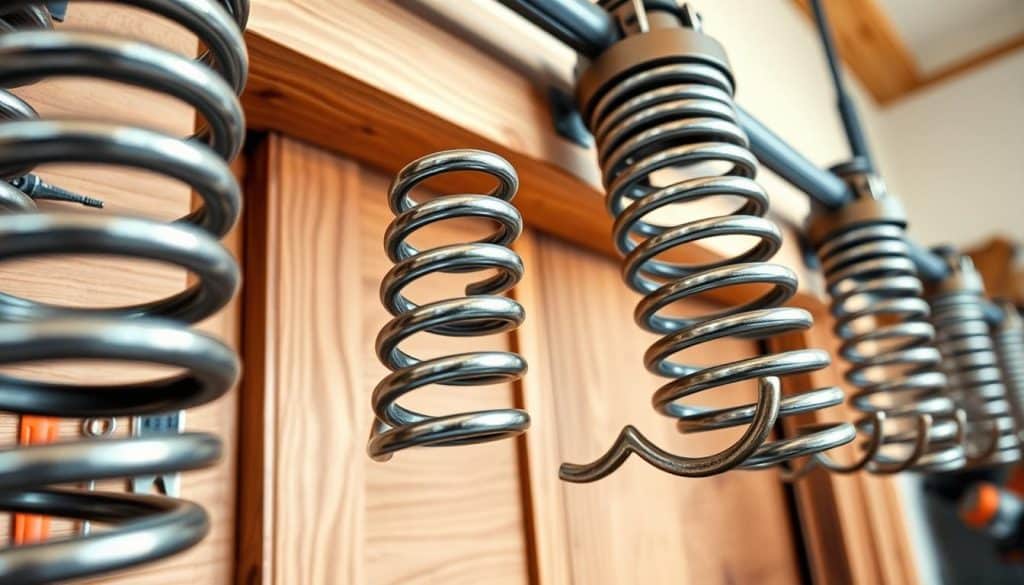
Counterbalancing weight with stored energy and torque
Torsion types convert torque into controlled cable motion via drums at each end of the shaft. That torque offsets the panel’s weight, which for many residential panels ranges from roughly 250 to 600 pounds.
Where springs live: above the header vs. along the tracks
Extension coils run parallel to the floor along the track path. They stretch as the panel closes and contract with pulleys and cables to lift it. Cables fasten to bottom brackets and wrap the drums, keeping the panel aligned.
- Balance: Correct spring size lets the panel stay put anywhere on the tracks.
- Safety: Visible parts may look still while holding stored energy—do not touch.
- Signs: Heavier, noisy, or jerky operation often means tension or cables need attention.
Torsion springs vs. extension springs: types, placement, and how they differ
Choosing the right coil system makes a big difference in smooth, reliable operation.
Torsion springs mount above the opening on a metal shaft. They wind and unwind to turn cable drums. That torque lifts the panel evenly and keeps exposed parts to a minimum. Torsion systems often last longer and run quieter. Wider or heavier openings may use two or more torsion springs to share the load and improve balance.
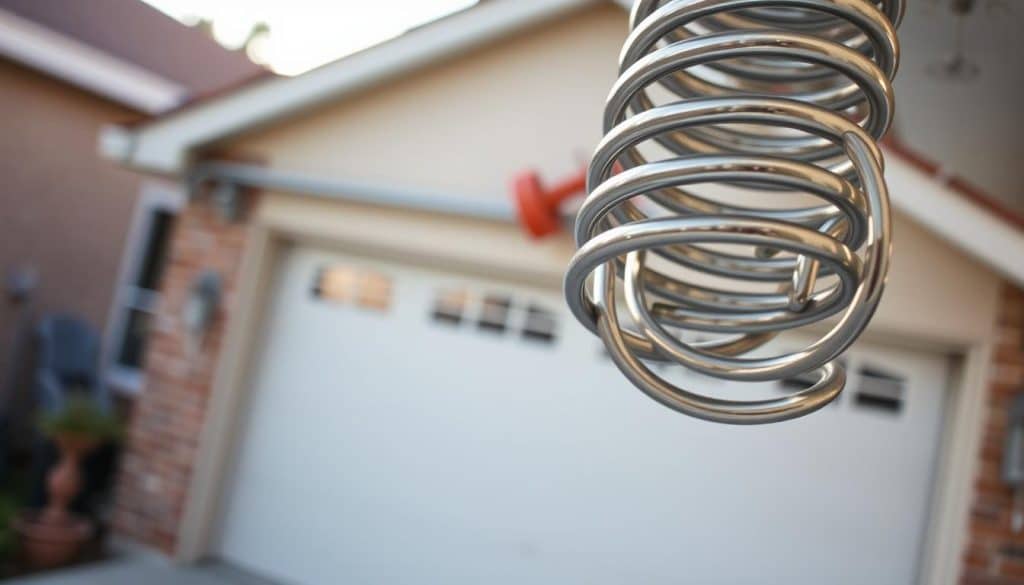
Torsion systems: torque on a shaft for smoother operation
Torsion concentrates stored energy on a steel shaft. This reduces lateral sway and lowers wear on rollers and tracks. With fewer exposed components, torsion is generally the safer, more durable choice.
Extension systems: stretch-and-contract along the tracks
Extension springs run parallel to the tracks and use pulleys and cables. They stretch as the panel closes and contract to lift it. Extension setups can fit low-headroom openings and are often more budget-friendly, but they expose more moving parts that need service.
- Fit: Headroom and opening size matter when choosing types garage door setup.
- Load: Heavier panels often benefit from multiple torsion springs for stability.
- Service: Correct cables and matching spring size are essential for safe, balanced operation.
We inspect your opening, discuss options, and recommend the safest, most reliable setup for your home. If you’re unsure about your current system, we identify the configuration and explain the best path forward.
Inside the operation: step-by-step of opening and closing cycles
Follow one open close cycle and you’ll see stored energy move through parts. We explain what winds, what unwinds, and why balance matters.
Door closing: springs wind, storing energy; cables wrap the drums
As the panel settles, torsion springs wind tighter and the cables wrap the drums. That action lets the system store energy ready for the next lift.
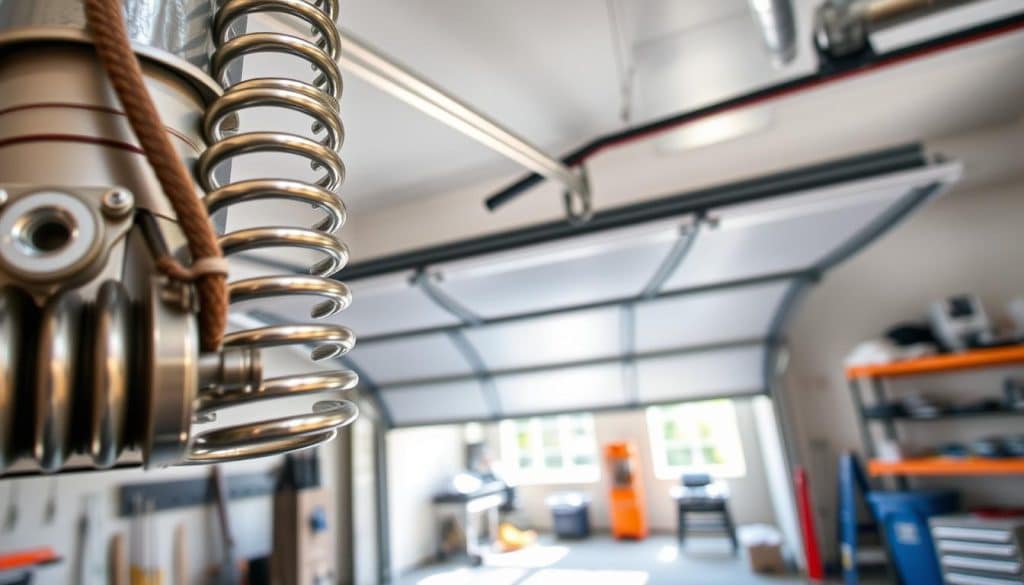
Door opening: springs unwind to lift; the opener guides, springs do the heavy lifting
When you open, torsion springs unwind to turn the shaft and drums. The opener controls motion, but the coils carry the bulk of the weight.
Balance matters: why a properly balanced door feels “light”
A balanced panel will stay put when lifted halfway. That indicates correct tension and less stress on the opener and cables.
Multi-spring setups and cycle life: wear, tear, and replacement timing
- Split load: Torsion springs or multiple coils share weight for wider openings.
- Cycle rating: Most residential coils are near 10,000 cycles; frequent use shortens lifetime.
- Listen and act: Scraping, popping, or uneven travel usually signals service time.
- Test balance: An open close test with the opener disconnected confirms tension and health.
Warning signs of spring trouble and when to stop using the door
Watch for sudden changes in motion or loud snaps — these are signs to stop using the opener. Failing components create risks and can make the panel unsafe to operate. Protect people and property by pausing use and calling for service.
Jerky movement, loud bangs, visible gaps, and a door that won’t stay open
A loud bang followed by a panel that won’t lift is a classic sign of a broken spring. If the panel moves unevenly or stops after a few inches, the system likely lost tension.
Look for a visible gap in torsion springs or warped extension springs. Rust, sudden metal-on-metal noise, or a panel that drops fast mean immediate shutdown is wise.
Heavy manual lift, uneven travel, frayed cables, and rust on coils
If the panel feels heavy by hand, the coils or cables are not counterbalancing weight. Frayed cables, slack lines, and rust show escalating wear and can cause further damage.
- Do not keep using the opener after a loud snap.
- Avoid tugging or “helping” the panel—this can make cables jump drums and worsen problems.
- Keep people and pets away and call us for on-site diagnostics and fast repairs to restore safe operation.
Safety first: maintenance tips and why spring work is a pro-only job
A few simple steps each year can extend the life of your entire door system. Regular attention reduces sudden failures and keeps daily operation smooth.
Smart upkeep: silicone lubrication, cleaning debris, and checking balance
Maintenance basics are easy and safe to do yourself. Use a silicone-based lubricant (not WD-40) on coils and hinges twice a year. Cycle the panel a few times to spread the lubricant.
Keep tracks clear and inspect cables and brackets for fray or rust. Test balance by disconnecting the opener and lifting the panel halfway. If it drifts or drops, schedule professional service.
High tension hazards: risks of DIY and the case for professional service
Coils hold extreme tension. Improper winding or loosening can cause severe injury or property damage. For replacement, calibration, and tension adjustments, trust trained technicians with the right bars and fixtures.
Local help, fast: Garage Home Pros emergency repairs in Davenport, FL
- Routine tune-ups and safety checks Monday–Saturday, 8:00 a.m.–9:00 p.m., no after-hours fees.
- Preventive replacement options for springs near their 10,000-cycle life to avoid downtime.
- Fast on-site repairs, full checks of cables and balance, and final safety tests before we leave.
Call (321) 200-0727 or email garagehomepros@gmail.com for prompt, friendly door service across Davenport and a 20-mile radius.
Conclusion
Small problems caught early avoid costly replacement and emergency repairs later. Now that you know how stored energy counterbalances weight, you can spot issues and call for timely attention.
Whether your home uses torsion or extension coils, we match parts and size so the garage door and opener run smoothly through every open close cycle.
Stop using a panel that feels heavy or runs unevenly. Call our family team for fast, friendly service and clear pricing.
Ready for help today? Call (321) 200-0727 or email garagehomepros@gmail.com for same-day support in Davenport, FL and nearby areas.