Your Garage Door Services Company!

Family owned and operated.

We can service any garage door you want

same day service available

Family-Owned Since 2014

We’re not a far-off corporate office—we live and work right here. Our family-owned business has been serving Lakeland and surrounding counties for over a decade, making sure every installation project gets genuine personal attention from start to finish.

300+ Five-Star Reviews

Our reputation is built on proven results. Thanks to over 300 five-star Google reviews, our customers regularly celebrate our expert installation, strong focus on detail, and friendly, responsive customer service.

10+ Years of Experience

Our team of installation technicians applies years of real, on-the-job experience to every project. Because of this, your new garage door is set up correctly on the first visit, without the hassle of follow-up fixes.

Table of Contents

Question: Could a few careful steps now save you stress and a costly repair later?

We’re Garage Home Pros, family owned since 2014. We serve Davenport, FL and nearby towns within a 20‑mile radius. Our team offers fast, friendly service and clear guidance for safe, reliable installation work. Call (321) 200-0727 or email garagehomepros@gmail.com.

This short guide sets a clear path. You’ll learn key parts, simple steps, and safety checks. We cover bottom panel setup, vertical rails, the curved section, and ceiling hangers. Small adjustments early prevent binding and noise later.

We emphasize safety around high‑tension springs and overhead work. Manual systems are easier since they are lighter and have fewer parts. If anything feels risky, we’re one call away and ready to finish the job to manufacturer specs.

Key Takeaways

  • Follow a step‑by‑step plan for smooth, quiet operation.
  • Know each part and its role before starting.
  • Leave fasteners loose for final alignment checks.
  • Prioritize safety with springs and overhead fittings.
  • Call us for fast, professional service when needed.

What this guide covers and when DIY makes sense

We give straightforward guidance so you can judge which tasks are safe for DIY and which need pros. Safety is central: some jobs are low risk, others involve high tension parts and require trained hands.

This guide covers prepping the door opening, centering panels, assembling vertical and curved sections, and confirming smooth movement before final tightening. We explain the process in clear steps and point you toward manufacturer instructions and videos when needed.
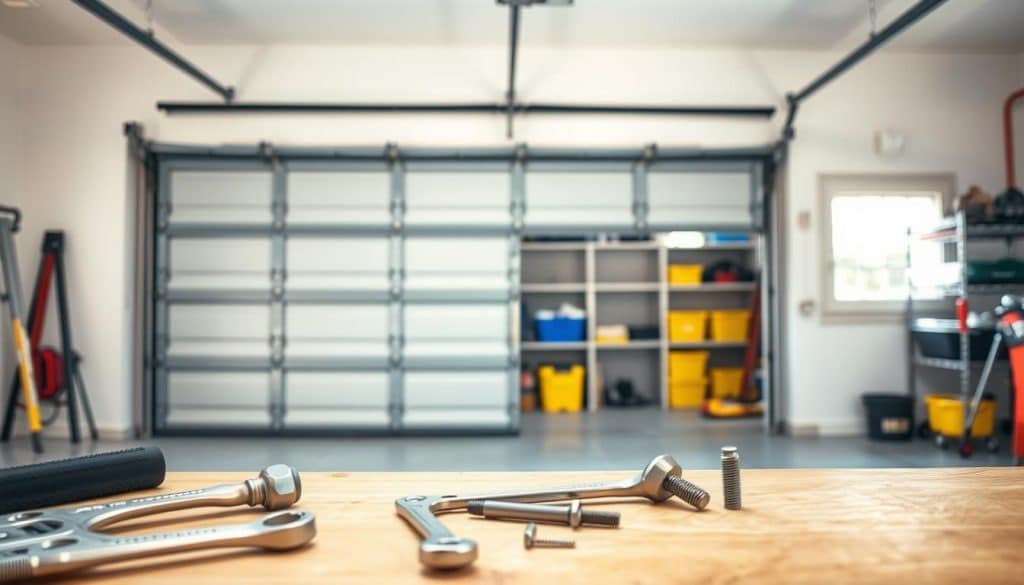
A well-lit garage interior showcasing a partially open, modern steel garage door with intricate hardware details. In the foreground, a set of garage door installation tools, including a wrench and screws, are neatly arranged on a workbench, highlighting a DIY approach. The middle of the scene features the garage door track system, installed but not fully finished, providing a clear focus on the installation process. In the background, a clean and organized garage space with shelves containing equipment and storage bins creates an inviting atmosphere. The overall mood is practical and encouraging, emphasizing a DIY spirit, with natural daylight streaming in through a nearby window to add warmth and clarity to the image.

Most homeowners can handle panel stacking, hinge and bracket placement, and initial rail positioning. Measure the opening for correct size and squareness first. A tight or oversized opening changes how parts fit and can cause binding or damage.

  • DIY-friendly: panel placement, rollers, and basic alignment.
  • Leave to pros: torsion springs, cable tensioning, and complex motor hookups.
  • If you prefer not to do it: we remove old units, install garage systems, and test everything for reliable operation.

Call (321) 200-0727 or email garagehomepros@gmail.com for same-day service in Davenport, FL and nearby towns. We work Monday–Saturday, 8:00 a.m.–9:00 p.m., with no after‑hours fees.

Essential tools, materials, and safety before you start

Before any work begins, gather the right tools and confirm the opening is ready. This step makes the job faster and reduces risk. We recommend checking the framing, center pad, and nominal size of the panel set so nothing is forced later.
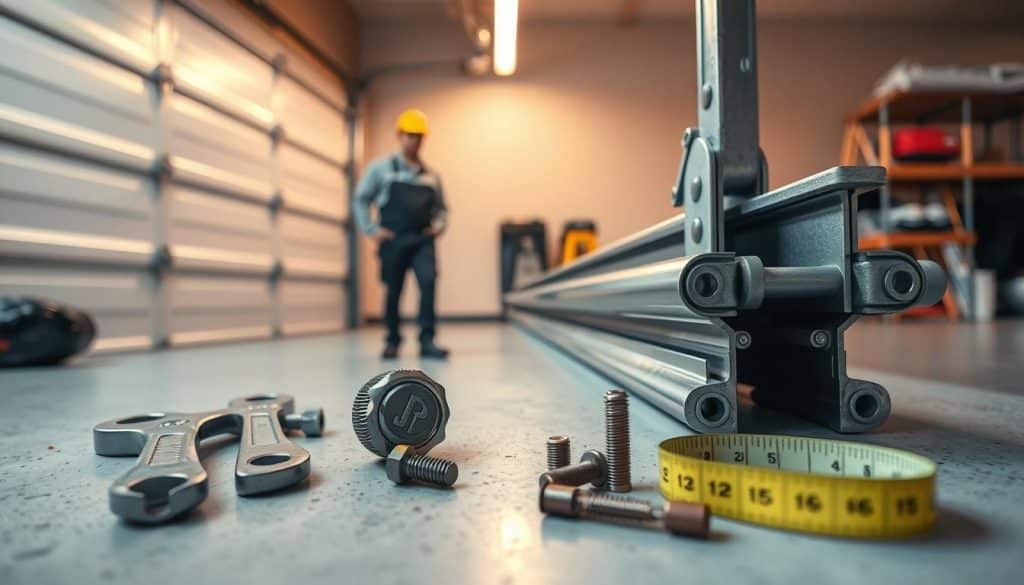
A close-up view of a garage door track system, emphasizing the metal tracks and rollers. In the foreground, a set of essential installation tools such as a wrench, measuring tape, and screws is neatly arranged. The middle ground features the garage door track installed along a wall, showcasing the smooth, shiny metal and the intricate roller mechanism. In the background, a spacious, well-lit garage with a soft overhead light creates a warm atmosphere. A person in professional work attire stands beside the door, examining the track, highlighting safety and preparation. The overall mood is focused and practical, conveying a sense of readiness for installation work. The shot is taken at eye level to capture details clearly.

Keep safety front and center. Wear gloves, safety glasses, and sturdy shoes. For torsion springs, only use 1/2″ cold‑rolled winding bars and follow manufacturer procedures. Never substitute makeshift tools for high‑tension parts.

  • Gather tools: level, electric drill with 5/32″ and 1/4″ bits, ratchet set, open‑end wrenches, locking pliers, screwdrivers, and a small step ladder.
  • Organize hardware: rollers, hinges, brackets, lag screws, and track sections so left/right parts stay separate while panels are handled.
  • Prep the opening: verify door size, check for plumb and square, and confirm the center pad is at least 15″ and pre‑drilled for lag screws.
  • Inspect structure: replace weak or split wood before fastening brackets; solid anchors prevent future failure.

If you lack the right tools or prefer a pro setup, we can bring everything and finish the job in one visit. Call Garage Home Pros at (321) 200-0727 or email garagehomepros@gmail.com. We’re family‑owned since 2014 and ready to help—fast and friendly.

How to install a garage door track

Start by placing the vertical assemblies so rollers seat cleanly and the opening stays even. Position each vertical track about 1/2″ from the panel edge and align brackets with framing studs.
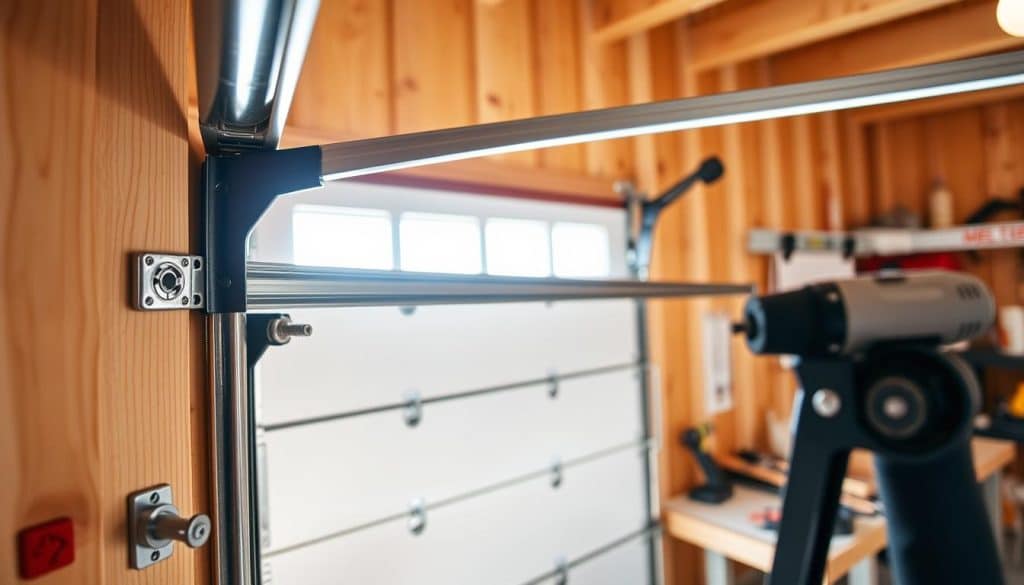
A close-up view of a garage door track installation process, showcasing a metallic track system mounted along a wooden garage wall. In the foreground, detailed components such as brackets, screws, and an uninstalled garage door can be seen, emphasizing the tools needed for installation. The middle layer features an open garage door, partially revealing the interior space filled with sunlight streaming through a window, casting soft shadows. The background includes a neatly organized workbench with tools like a drill and a level. The scene captures a professional atmosphere, with bright, even lighting to highlight the installation steps. The overall mood is focused and instructional, conveying a sense of hands-on craftsmanship in a domestic setting.

Insert rollers into hinges and bottom fittings, then wrap the vertical tracks around the wheels. Lag screws should be set snug but left slightly loose for final adjustment.

  • Set the bottom of each vertical track so rollers sit without squeezing the panel.
  • Hold the vertical track plumb and snug lag screws, keeping clearance even from bottom to top.
  • Connect the curved horizontal track at the flag bracket and add the end bearing plate where the shaft will sit.
  • Fasten rear hangers to the ceiling plumb, allowing a 1/2″–1½” rise at the back for proper parking.

Check level across both tracks and confirm each vertical is plumb. Verify smooth transitions by moving the panels by hand. Once movement is free and even, tighten lag screws and bolts side by side.

If aligning overhead hardware isn’t your preference, we can level and test your new system the same day. Call Garage Home Pros at (321) 200-0727 for service in Davenport and nearby towns.

Integrating panels, rollers, and brackets with the track system

Stacking panels with care sets the tone for quiet, long‑lasting operation. Identify the bottom panel by its weather‑strip. Fit bottom cable and roller fixtures at both corners before moving the stack into place.

Lay panels face down while you stage hinges and bottom brackets. Bring the first panel into the opening centered and level. Place each panel on the last, confirm edges are flush, then fasten hinges.

  • Use #1 hinges at intermediate stiles and the numbered end hinges where specified so the door bends predictably.
  • Insert a roller at each end hinge and in bottom fixtures, then gently wrap the vertical tracks around the wheels before final tightening.
  • Set adjustable top fixtures a few inches below the top edge so the top roller rides cleanly through the curve.

Keep clearances consistent along the side and through the curve. If you hear scraping or feel resistance, move the tracks slightly and recheck before tightening hardware. Cycle the door by hand slowly and confirm quiet travel.

Need help stacking without scuffs or dents? We’ll deliver a precise fit. Garage Home Pros: (321) 200-0727 – garagehomepros@gmail.com – Family‑owned since 2014.

Spring systems and opener considerations that affect track setup

Opener placement and spring balance work together to keep guides true and quiet.

Torsion vs. extension springs changes the approach and risk. Torsion springs sit on a shaft above the opening and require proper winding bars. Extension springs run along the side and must have safety cables through the center.

Even cable tension matters. Unequal tension makes the door tilt, bind, or scrape. After any spring work, verify vertical tracks and horizontal tracks remain true at the top and along the curve.

Opener rail, sensors, and headroom

Mount the opener rail on the door centerline and keep it straight. Confirm there is enough ceiling clearance so the opener hardware doesn’t pull the guides out of square.

  • Set photo‑eye sensors low and parallel to avoid false reversals.
  • Operate the system manually first; it should balance at mid‑travel.
  • If the door feels fast or heavy, stop and adjust spring turns or call us.

Working with springs is dangerous. We handle torsion and extension setups daily and can balance and test your system safely. Call Garage Home Pros at (321) 200-0727 for prompt service, Monday–Saturday 8:00 a.m.–9:00 p.m.

Troubleshooting track installation and when to call Garage Home Pros

A misaligned guide usually gives clear clues before serious damage occurs. Catching issues early protects panels, rollers, and hardware.

Common signs: door off track, binding in the curve, uneven gaps at the jambs, or noisy rollers. Each symptom points to a specific part of the system that needs attention.

  • Re‑level the vertical track so clearances match from bottom to top and rubbing stops.
  • Re‑square horizontal sections at the flag bracket to smooth the curve and eliminate binding.
  • Adjust brackets so rollers ride centered in the cup; misalignment wears parts fast.
  • Check ceiling and rear hangers for loose fasteners that let the tracks shift under load.

Safety first: clamp or lock the door before any work. Springs, cables, and drums hold dangerous tension and must be handled by trained technicians using proper tools.

If the opener is straining or the door keeps reversing, disconnect power and test the system by hand. When in doubt, call us. We fix doors off tracks, binding doors, broken springs, and cable issues—fast.

Contact Garage Home Pros: (321) 200-0727 — garagehomepros@gmail.com. Family‑owned since 2014. Emergency repairs, Monday–Saturday 8:00 a.m.–9:00 p.m., serving Polk, Osceola, Lake, Orange, and Seminole counties within 20 miles.

Conclusion

Wrap up by running the door several times and confirming even clearances.

Run the unit slowly through full travel. Watch that the vertical track and horizontal track line up from the door opening at the bottom to the top. Check that brackets and hinges stay snug and that rollers move freely.

Use light oil on steel rollers; avoid grease on rail surfaces. Adjust door stops at the jambs so the seal holds without binding. Level any uneven sections and tighten final fasteners evenly.

If your schedule is tight or you want a precise new garage door or garage door installation, we’ll finish the job to spec. Call Garage Home Pros at (321) 200-0727 or email garagehomepros@gmail.com. We serve Davenport, FL and nearby towns.


FAQ

What does this guide cover and when is a DIY approach appropriate?

We walk through track placement, hardware, panel handling, and safety. DIY suits basic track alignment, roller replacement, and bracket tightening if you have tools and comfort with ladders. Leave high‑tension springs, cable work, or damaged panels to pros for safety and warranty reasons.

What tools and hardware will we need before beginning?

Gather a drill, ratchet set, level, plumb line, adjustable wrench, ladder, hammer, tape measure, safety glasses, and protective gloves. Stock lag screws, track bolts, flag brackets, end bearing plates, rear hangers, rollers, hinges, and weather stripping so you don’t stop mid‑job.

What safety must‑knows should we follow?

Always support the door when removing rollers or panels. Never adjust torsion springs or cables unless trained. Use eye protection and sturdy ladders. Keep bystanders clear and disconnect the opener before any work near moving parts.

How do we check and prepare the opening first?

Verify framing is square and plumb. Confirm the center pad above the opening for spring hardware and check headroom for torsion or opener rails. Measure door size and clearances so tracks and springs match manufacturer specs.

How should vertical tracks be set and secured?

Position vertical tracks so rollers sit freely in the race and the track face is plumb. Leave fasteners loose initially, then tighten progressively while checking roller engagement and an even gap between track and door edge.

What’s the correct way to align and fasten tracks with lag screws?

Start with lag screws finger‑tight. Align the track with a level and plumb line, then torque fasteners evenly from top to bottom. Over‑tightening can bend the track; snug, secure connections keep alignment stable.

How do we attach horizontal tracks and end bearing plates?

Bolt horizontal track sections to flag brackets and end bearing plates at the header. Support rails with rear hangers to maintain straight runs. Ensure plate bearings are seated correctly to allow smooth wheel rotation.

What’s the correct method for installing rear track hangers to the ceiling?

Fasten hangers into solid framing or use proper anchors in joists. Keep hangers level and spaced per the door width. Adjust hanger height so the horizontal track aligns smoothly with the vertical section without sagging.

How do we verify level, plumb, and smooth transitions?

Use a level on vertical and horizontal sections and a straightedge through the track run. Cycle the door manually to feel for binding. Adjust brackets or hangers until the door moves smoothly with even gaps top and sides.

How are panels, rollers, and brackets integrated with the track system?

Stack panels into position, attach hinges and bottom brackets, then insert rollers into the vertical track. Secure each hinge and roller bracket, confirming weather‑stripping seats properly and panels align before final tightening.

What is the correct way to insert rollers and have them ride the tracks?

Place rollers into the track at the bottom and guide them upward so wheels engage the race. For horizontal wraps, position the wheel into the curved section and slide the panel forward so the roller rides without rubbing the track flange.

What clearances and adjustments reduce friction and damage?

Maintain manufacturer‑specified gaps between rollers and track, and between door edges and jambs. Tighten hinge bolts to eliminate wobble but avoid binding. Lubricate bearings and rollers with a silicone or lithium spray for quieter operation.

How do torsion and extension springs affect track setup?

Spring type changes headroom and cable tension, which alters track alignment needs. Torsion springs require a secure center plate and precise cable drums. Extension springs change end‑plate loads. Never tweak spring tension unless certified.

What should we consider about openers, rails, and sensors?

Opener rails must align with the track center and allow full door travel. Maintain required headroom for ceiling‑mounted units. Mount safety sensors 4–6 inches above the floor and keep the photo‑eye line clean and square for reliable reversing.

What common track installation issues should we watch for?

Watch for doors going off track, binding at the curve, uneven gaps, noisy rollers, and loose brackets. These stem from misaligned verticals, sagging horizontals, or worn hardware. Early correction prevents panel damage and opener strain.

What quick fixes can we try before calling a pro?

Re‑level a vertical track, re‑square horizontal rails using hanger adjustments, tighten loose fasteners, and replace worn rollers. Lubrication often reduces noise. If springs, cables, or bent tracks are involved, call Garage Home Pros for safe repairs.

When should we contact Garage Home Pros and how do we reach you?

Contact us for spring work, cable repair, bent tracks, or any repair that feels unsafe. Call (321) 200‑0727 or email garagehomepros@gmail.com. We’re family‑owned since 2014, offer emergency repairs Monday–Saturday 8:00 a.m.–9:00 p.m., no after‑hours fees, and serve Polk, Osceola, Lake, Orange, Seminole counties within 20 miles.

Reasons to choose us:

Customer Review Rating Stars - Garage Home Pros

Experience

Over 10 years of experience

Relationship building strategies for success

Commitment

Providing 100% satisfaction

Premium Badge - Clear Quality Illustration

Quality

The staff is highly skilled and reliable

Gold Medal for Best Garage Professionals

Professional

Professional support throughout

Tag Pricing

Price

Affordability that won't empty your pockets

Providing the best service to customers

Garage Door Repair

Garage Door Installation

garage door Maintenance

Broken Spring Replacement

Opener Repair & Installation

garage door replacement

Our Central Florida Coverage Area

Our installation teams cover a 25-mile radius from our Davenport headquarters, ensuring prompt service throughout Central Florida. Not sure if you’re within our service area? Give us a call at (321) 200-0727 and we’ll be happy to confirm.

Garage Home Pros proudly serves Lakeland FL homeowners and additionally covers these Central Florida counties:

Service Hours: Monday–Saturday, 8:00 a.m. to 9:00 p.m. (Closed Sundays)

Response Time: Fast response with no after-hours fees