What Size Garage Door Spring Do I Need? Can a single, well-chosen torsion spring make your overhead system feel effortless and last longer?
We’re Garage Home Pros, family-owned since 2014. We serve homeowners near Davenport, FL, with fast, friendly service. Our team fixes springs right the first time and offers same-day emergency repairs with no after-hours fees.
A correctly matched torsion spring counterbalances the door weight so the opener works smoothly. Standard springs use common inside diameters and variable wire gauges. The right match depends on wire, inside diameter, length, wind, door weight, drum size, and track radius.
In this guide we explain safe measuring methods, tell when conversions help, and list common mistakes to avoid. If tension tasks feel risky, stop and call us at (321) 200-0727 or garagehomepros@gmail.com for prompt help.
Key Takeaways
- Correct torsion springs reduce strain and extend opener life.
- Four core specs matter: wire, inside diameter, length, and wind.
- Measure safely or use manufacturer info; weighing the door helps.
- Avoid measuring while mounted and mismatched pairs.
- We provide fast local service across Polk, Osceola, Lake, Orange, and Seminole counties.
Understanding Garage Door Springs and Why Size Matters
A correctly matched spring assembly keeps a heavy panel balanced so the opener only guides motion, not lift it. Balance means the panel stays put at top, middle, and bottom. If it drifts or slams, the assembly needs attention.
Torsion vs. extension systems at a glance
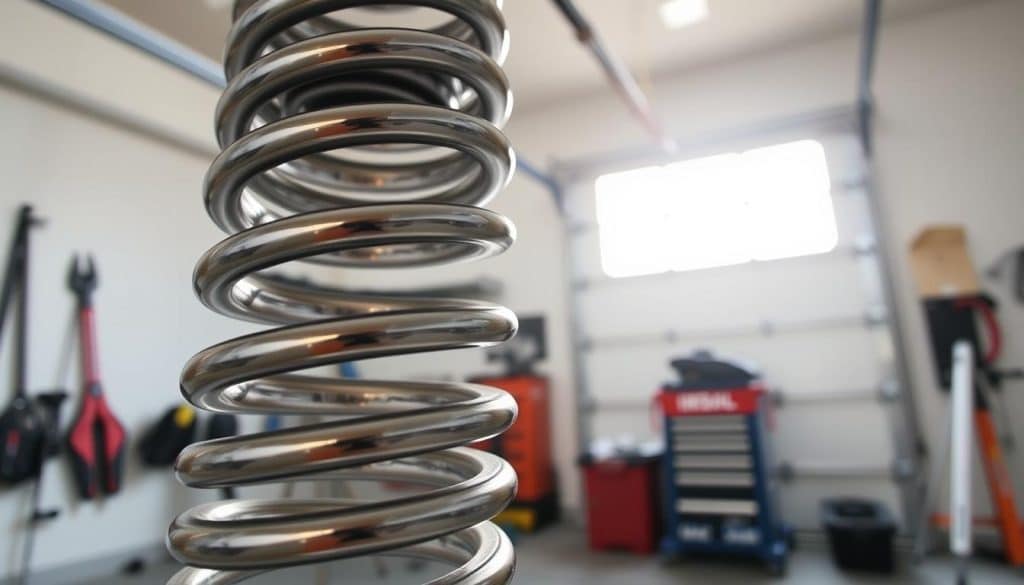
Torsion units mount above the opening on a shaft and store torque by winding. Torque travels through the shaft to cable drums, which pull the bottom of the panel up with cables.
Extension units sit along the horizontal tracks and store energy by stretching. They can work well where headroom is limited, but they act differently than torsion setups.
How springs counterbalance weight and protect your opener
Properly sized springs make the panel feel light by hand and prevent the opener from deadlifting weight. Undersized coils force the opener to work harder, wear gears, and risk safety reverse failure.
- Balanced lift reduces cable peeling and shock loads to panels and rollers.
- Drum diameter and track radius slightly change required turns and total lift.
- Torsion systems typically give smoother control and longer life than extension systems.
If anything looks unsafe or the panel does not stay put, call us at (321) 200-0727. We’ll explain the safest next step and can schedule same-day help across Polk, Osceola, Lake, Orange, and Seminole counties—no after-hours fees Monday–Saturday.
Safety First: Springs Are Under Extreme Tension
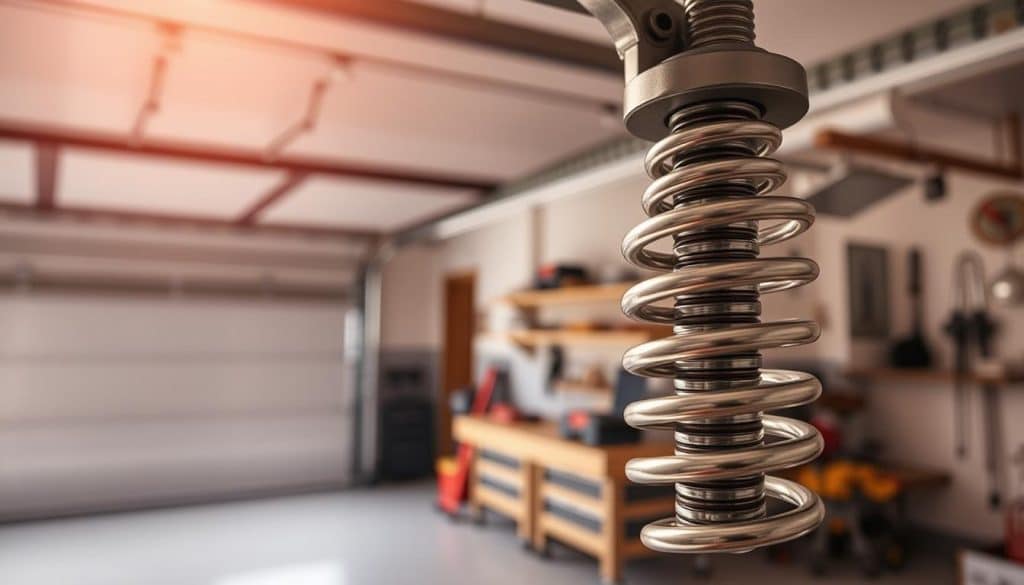
High tension in torsion assemblies means one wrong move can cause serious harm. Torsion coils hold large torque even when the panel is open. Handling set screws, cones, or bars incorrectly can release that energy suddenly.
When to stop and call a professional
If the unit won’t lift, rises only a few inches, or you spot a visible gap in a torsion coil, stop and disconnect the opener. These signs point to a broken spring situation.
Do not loosen set screws, remove cones, or insert winding bars unless trained. For your safety, call us for emergency garage repair Monday–Saturday 8:00 a.m.-9:00 p.m. We fix broken springs, cables, and panels off track quickly and safely with no after-hours fees.
Why DIY wire-direction and wind errors are dangerous
Misidentifying wind direction or guessing wire gauge can leave the system unbalanced. Right-wound cones (red) and left-wound cones (black) must sit on the correct side of the center bracket. Incorrect wind causes slipped cables, damaged drums, and faster failures.
- Never use the opener to force a heavy panel with a broken coil; this strips gears and harms the system.
- Measuring while mounted is unsafe and inaccurate; coils change length with each turn.
- We carry the tools, bars, and PPE to secure the panel, verify wind and wire, and install replacements safely.
Call (321) 200-0727 if you suspect a broken spring. We’ll prioritize safety, inspect cables, drums, bearings, and fasteners, and provide same-day local service across our service area.
What size garage door spring do I need
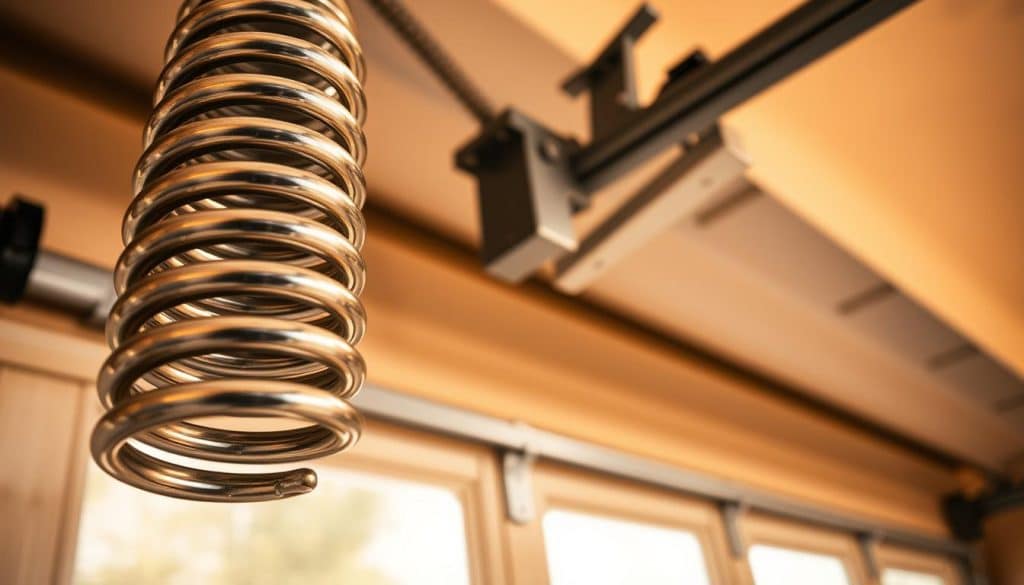
Accurate coil measurements and matched parts keep your system smooth and long-lasting. We size torsion units by four core specs and then confirm lift against your actual panel weight.
The four core specs
Wire size: measured with the DASMA 10/20 coil method to identify the correct spring wire.
Inside diameter: often stamped on the cone (1.75″, 2.0″, or 2-1/4″ for some Raynor units).
Overall length: we measure off the panel to the nearest 1/4″.
Wind direction: cone color and coil rotation tell us which side each coil belongs to.
Door weight, drum diameter, and track radius
Lift depends on panel weight and drum diameter (4″ is common) plus the track radius. A larger radius needs more turns and slightly increases required lift.
Matched pairs vs. one spring
- We recommend matched pairs on two-spring setups for balanced operation and longer cycle life.
- Converting one large spring into two can reduce shaft stress and improve reliability for a modest cost.
- We can also upgrade to higher-cycle springs by choosing thicker wire and greater length while keeping lift unchanged.
We’ll determine the correct specs on-site and present options that match your usage and budget. Call us for fast, professional sizing and installation.
How to Measure Torsion Springs Correctly
Good measurement starts on a flat surface and uses coil counts, not calipers. Lay the coil straight, count exact groups of 10 and 20 coils, then match those distances to a DASMA wire chart.
Wire size: coil counts and DASMA
Count 10 and 20 coils and record the lengths. Use the DASMA table to identify the torsion spring wire. Avoid calipers—paint and rust give false readings.
Inside diameter (ID)
First check the winding or stationary cone for a printed number like 1.75 or 2.0. If none is present, measure the inside diameter to the nearest 1/16 of an inch.
Overall length
Measure the coil end-to-end off the panel to the nearest 1/4″. Include coils under the cone but not the cone itself. Never measure while mounted—each turn changes length.
Wind direction and cone color cues
Verify wind by coil rotation or cone color: red equals right-wound and belongs on the left of the center bracket; black equals left-wound and belongs on the right. Record drum number and track radius too—they affect required turns.
If any step feels risky, we’ll measure for you during a service call and install the correct parts safely the same day.
Three Safe Ways to Determine the Right Spring Size
Three proven checks let us confirm the correct coils and lift without guesswork. Each method follows industry practice and keeps you safe. We can perform any of these on-site and offer same-day and emergency options Monday–Saturday with no after-hours fees.
Method A: Measure existing springs accurately
Measure wire via 10/20 coils, inside diameter to 1/16″, overall length to 1/4″, and record wind direction. Use coil counts rather than calipers to identify wire size reliably.
Method B: Weigh the door with an analog scale
Disconnect the opener and secure cables first. Then place an analog bathroom scale under the panel and lift slowly. Each torsion unit in a pair will be rated for about half the panel weight. We prefer analog scales because digital units can hold readings and miss subtle changes during lift.
Method C: Use the manufacturer and model number
Provide the door manufacturer, model number, width, height, drum number, track radius, and strut count. With that data we calculate door weight and specify the correct coil specs remotely or on-site.
- If you have nonstandard 4″ drums, high-lift, or vertical-lift tracks, special calculations apply; our techs handle them.
- We recommend replacing both coils on a two-coil setup. Matched cycle life prevents premature failure of the remaining unit.
- When measurement isn’t practical, call us and we’ll secure the panel, weigh it, and bring the proper parts to complete the job in one visit.
Questions or ready to schedule? Call Garage Home Pros at (321) 200-0727. We’ll explain which method fits your system and arrive prepared to finish the work quickly and safely.
Torsion vs. Extension Springs: Choosing What’s Best for Your Door
Choosing between torsion and extension units affects balance, maintenance, and how smoothly your panel moves. We evaluate headroom, track type, and support before recommending a path.
Torsion systems deliver smoother starts and stops and better balance through travel. They use fewer moving parts and can reach higher cycle ratings—often up to 20,000 cycles with upgraded wire and length.
Extension systems remain a sensible choice when low headroom prevents a shaft. They work well but usually require more maintenance and often provide about 10,000 cycles under normal use.
- Torsion reduces wear on the opener by properly counterbalancing weight and preventing motor strain.
- Extension units suit tight clearances but may cause bounce or jolt at travel limits.
- Converting to torsion can cut cable slack issues and improve safety by keeping stored energy on a shaft.
- We’ll discuss higher-cycle options when heavy use justifies the upgrade.
We handle both systems and advise a clear, cost-effective plan. Schedule an on-site evaluation and we’ll show whether a conversion fits your home and will improve long-term performance.
Color Codes, Cones, and Components That Guide Selection
Color cues speed accurate selection and cut field guesswork. We identify wind and wire gauge on-site so homeowners get the correct parts the first visit.
DASMA color coding for torsion wire gauges and wind indication
Torsion cones use simple color signs to show wind: a red cone means right-wound and goes on the left of the center bracket. A black cone means left-wound and belongs on the right.
DASMA paint bands map common torsion spring wire sizes. We still verify wire with 10/20-coil measurement and record the inside diameter and overall length before ordering parts.
Extension spring color codes by supported door weight
- End colors on extension springs indicate weight class so we match the spring to your actual door weight.
- We check stationary cone stamps for an inside diameter number (for example 1.75 or 2.0 inches) when present.
- We inspect drums, bearings, center bracket, and fasteners to ensure the complete system will operate safely after replacement.
- Color codes guide us, but measurements and door weight confirm the final choice.
- We document final specs and recommend heavier-duty wire or longer length when low-cycle parts were used previously.
Avoid These Common Spring Sizing and Replacement Mistakes
Mistakes in selection often show as noisy travel, uneven balance, or premature failure. We focus on fixes that prevent repeat service calls and keep your system safe.
Mismatched pairs and overstressed low-cycle parts
Never mix different specs. Matched pairs share cycle life and balance. If one fails, replace both torsion springs.
Tip: Converting a heavy single unit to two coils reduces shaft stress and cable wear.
Wrong drum number or track radius assumptions
Drum diameter and track radius change required turns and lift. A wrong drum number leads to poor balance and misfit springs.
Measuring while mounted or partially open
Do not measure active or partly open springs. Each turn alters length by about one coil.
Use 10/20-coil counts and a tape measure for true wire size. Avoid calipers; paint and rust mislead readings.
- Verify wind color and install right-wound on the left, left-wound on the right.
- Inspect cables, bearings, and bottom brackets during service.
- Perform a balance test at top, mid, and bottom before we leave.
We replace matched parts, validate hardware, and balance-test your garage door springs so your doors are safe and reliable when we finish.
Fast, Local Help from Garage Home Pros
When a spring breaks or a panel stalls, fast local help keeps your home safe and your schedule intact. We respond quickly, bring correct parts, and finish most jobs in one visit.
Emergency garage door spring repair with no after-hours fees
Same-day emergency service is available Monday–Saturday, 8:00 a.m.–9:00 p.m. We charge no after-hours fees and prioritize safety on every call.
Service area and hours
We’re family-owned since 2014 and serve homes within about 20 miles of Davenport, FL. Our techs cover Polk, Osceola, Lake, Orange, and Seminole counties.
Contact us
Call (321) 200-0727 or email garagehomepros@gmail.com to schedule. We stock common torsion IDs (1-3/4″, 2″, 2-1/4″), common wire sizes, and 4″ drums to finish most repairs on the first visit.
- We measure, match, and install paired coils, then balance-test the panel and fine-tune the opener.
- We repair openers, replace broken cables, and put panels back on track.
- Upgrades to higher-cycle torsion options are available for frequent use.
Clear pricing, courteous techs, and a reliable warranty—count on us to get your overhead system moving safely and smoothly.
Conclusion
A precise installation turns a noisy, heavy panel into a smooth, dependable system. Correct torsion specs—wire, inside diameter, length, and wind—must be validated against door weight, drum number, and track radius.
We recommend replacing coils in matched pairs and offer higher-cycle options for busy homes. When springs need replaced, we handle the high-tension work, final balance testing, and hardware checks so you don’t have to.
We’re here to help quickly and professionally with a friendly touch. Family-owned since 2014, we serve the local area and respond Monday–Saturday with no after-hours fees.
Call (321) 200-0727 or email garagehomepros@gmail.com for fast service and reliable results on your garage door.