We guide homeowners through the choices with clear, practical steps. Start by matching power and drive type to your doors. Chain drives suit heavier use; belt drives cut noise. Wall-mounted units free ceiling space for tall tracks.
Safety and security matter. Look for photo eyes, rolling code tech, and reliable manual release. Smart control features add convenience, letting you check status and get alerts from anywhere.
Proper balance and correct rail fit keep any opener running well. We focus on reliability and low maintenance so your purchase gives value for years.
We’re Garage Home Pros, family-owned since 2014. Call (321) 200-0727 for local service in Polk, Osceola, Lake, Orange, and Seminole counties. Fast response, same‑day fixes, and no after‑hours fees on weekdays.
Key Takeaways
- Match drive type and power to door weight and daily use.
- Prioritize safety and security features like photo eyes and rolling codes.
- Choose smart control if remote alerts and access matter to your routine.
- Confirm rail length and balance for proper fit and long life.
- Count on local pros for selection, installation, and emergency repair.
Quick buyer’s snapshot: match opener type, power, and features to your garage and lifestyle
Begin with a simple survey: door dimensions, nearby living areas, and how quiet you need the operation. Measure height and width, note whether your garage is attached, and estimate the door weight. Most residential units ship for standard 7 ft doors; taller doors (8 ft, 10 ft) need rail extension kits.
Prioritize these must-haves when comparing models: remote operation, motion lighting, and soft-start/stop performance. If bedrooms sit above or beside the bay, choose a quieter belt-driven system with a DC motor for reduced noise and vibration.
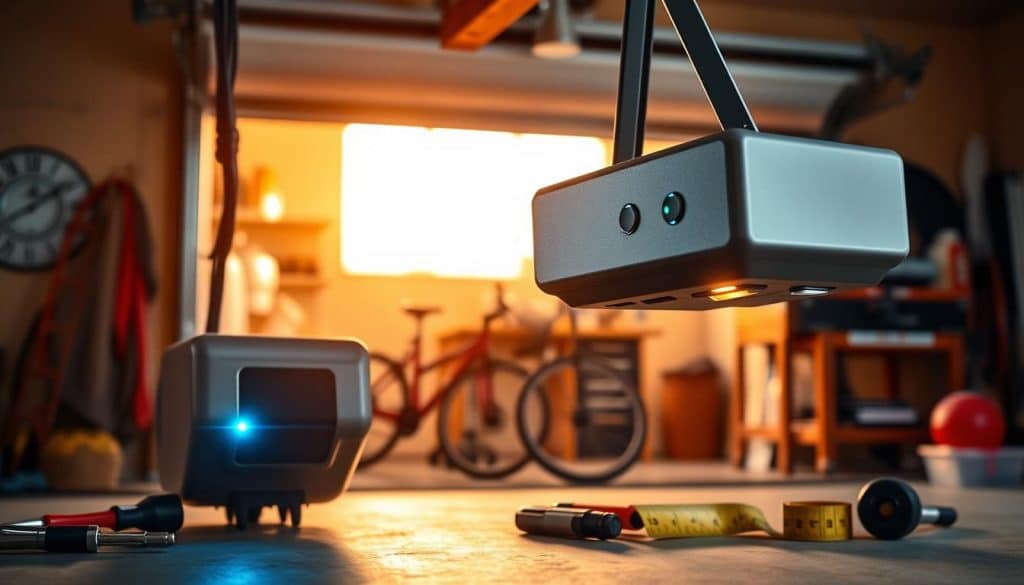
We present 2–3 strong options that match door size, location in the home, and your budget. We flag install constraints early—ceiling height and side clearance—so the selected type actually fits. For on-site verification within our 20-mile service area, call (321) 200-0727. We offer selection, delivery, setup, and safety checks Monday–Saturday with no after-hours fees.
- Confirm standard 7 ft height or plan for an extension kit.
- Match type and power to daily use and noise tolerance.
- Let us handle turnkey service and final safety testing.
Drive systems explained: chain, belt, screw and wall-mounted openers
Drive systems shape performance, noise, and upkeep more than model names do. We walk through each option so you can match strength and sound to your space.
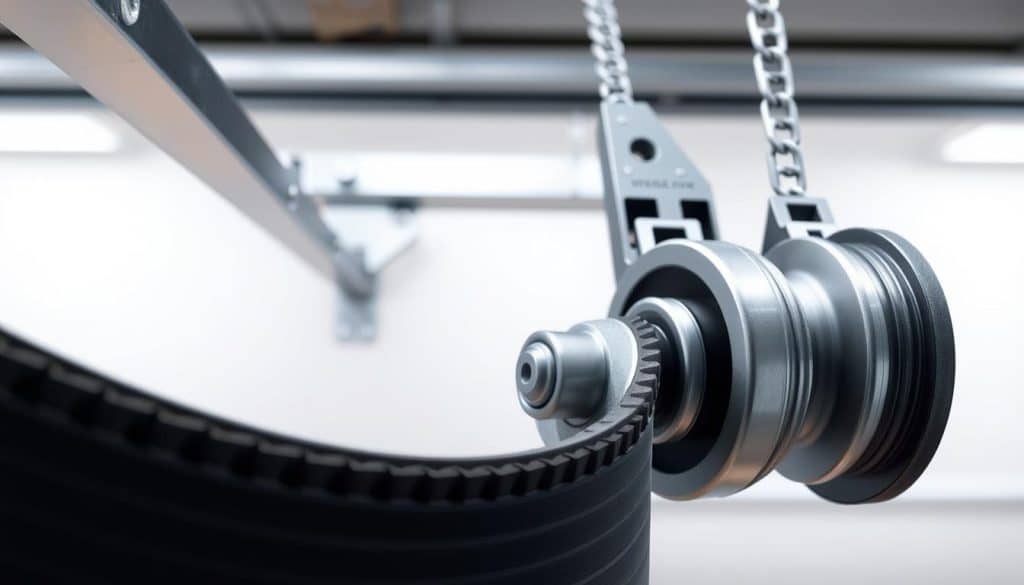
Chain drive
Chain drive uses a metal chain for durable, budget-friendly power. It offers strong operation for heavy doors but brings more vibration and higher noise.
Belt drive
Belt drive swaps chain for a reinforced belt. It runs quieter and smoother, making it ideal near bedrooms and living spaces.
Screw drive
Screw systems use a threaded steel rod. They have fewer moving parts and reduced maintenance. Noise sits at a middle level between chain and belt.
Wall-mounted (jackshaft)
Wall-mounted units free overhead space and reduce vibration. They need torsion springs, enough side room, and a nearby outlet. We verify those points before recommending this option.
- We install and service all major drive systems and match strength to door width and construction.
- We tune travel and soft-stop settings for long life and quiet operation.
- After work, we run safety checks and haul old units away.
Power and performance: choosing the right horsepower or Newton rating
A balanced system and the proper horsepower make the difference between service calls and years of trouble-free use.
For most standard steel single (9×7) and double (16×7) panels, a 1/2 HP or about 500 N motor gives reliable power and steady speed. These ratings handle common weight garage setups without excess strain.
When 1/2 HP or 500 N is enough
We recommend 1/2 HP or 500 N for typical steel doors that are well balanced and not oversized. This choice keeps operation smooth and reduces routine maintenance.
When to step up to 3/4 HP–1 HP or 700 N
Choose 3/4 HP–1 HP (or ~700 N) for wider than 14 ft panels, insulated or solid wood models, or doors with greater weight. Extra power provides the reserve needed for daily use and longer life.
Balance matters
An unbalanced spring system will stress any opener, regardless of horsepower. With the opener disengaged, lift the door to halfway; if it stays put, it’s balanced. We perform this test and adjust or replace springs so the opener doesn’t overwork.
- We right-size the motor and assess construction, width, and weight garage for proper recommendations.
- We tune soft-start/stop behavior and force limits to protect the door and hardware.
- Call us for a quick on-site assessment and preventive maintenance that preserves your investment.
AC vs. DC motors: noise, speed control, and battery backup
Motor technology shapes how soft the starts feel and whether the unit runs on battery during a blackout. We guide you through the tradeoffs so you get reliable daily operation and sensible power use.
AC motors
AC motors deliver durable value and lower upfront cost. They pair well with chain drives and suit heavy-use settings where a bit more noise is acceptable.
DC motors
DC motors run quieter and use less energy. Variable speed control gives smoother starts and gentler stops, which reduces wear on the door and hardware.
Battery backup
Battery backup keeps operation available during outages. DC systems often support integrated backup; AC units generally cannot due to higher power draw.
- We recommend AC motors when budget and long service life are primary goals.
- We recommend DC motors for quieter operation, variable speed, and gentler reversing.
- We install and test battery backup, run a test cycle, and explain expected cycles per charge.
- We verify charger status and give tips to preserve battery health and replacement timing.
Safety, security, and reliability features that should guide your choice
Reliable safety systems give real peace of mind every time the door moves. We prioritize your family’s safety and inspect critical items on every service call. Our focus is on meaningful upgrades that improve security and long‑term reliability, not just check‑the‑box claims.
Rolling code technology and photo-eye reversal for peace of mind
Rolling code remotes change the access code with each use, preventing code grabbing and boosting security. Photo‑eye sensors stop and reverse when the beam is broken. We test alignment, validate reversal both at the beam and on contact, and fine‑tune force limits.
Dual-frequency reliability to reduce signal interference
Dual‑frequency controls cut through interference from nearby devices. That means more consistent operation and fewer missed signals. We verify keypad programming and test radio reliability before we finish a job.
Don’t be swayed by legally required features—focus on real differentiators
Some speed and reverse specs are mandated by law. Look instead for robust radio performance, smooth reversing, and dependable safety features. We explain which items are required and which genuinely improve security.
- We install and align photo eyes, then validate reversal at beam and on contact.
- We recommend rolling code remotes for added security and verify keypad programming.
- We suggest dual‑frequency controls to reduce interference and ensure reliable operation.
- We fine‑tune force limits and review monthly test steps so systems remain dependable.
Smart controls and connectivity: Wi‑Fi, apps, and integrations
Smart connectivity turns a traditional opener into a tool you control from anywhere. We set up Wi‑Fi, pair your app, and walk you through alerts, schedules, and shared access. Our goal is reliable everyday convenience with clear guidance and fast local service.
Remote monitoring, alerts, and scheduling from your phone
Remote monitoring gives real-time status and activity logs on your phone. We confirm the app shows accurate open and closed states and enable alerts that warn if the door stays open or is used while you’re away.
Platform compatibility and add‑ons that fit your smart home
Smart systems can integrate with common home platforms and support voice or automation add‑ons. We review compatibility with your existing setup and explain router changes so connections stay stable.
- We connect your opener to Wi‑Fi and verify live status in the app.
- We set alerts, schedules, and shared access for family or guests.
- We demonstrate wall control, remotes, and app use, and leave quick‑start guides.
- We offer ongoing service Monday–Saturday with no after‑hours fees and support for backup options.
How to know what garage door opener to buy for your specific door and space
Pick an opener that matches your door size, ceiling height, and daily routine for reliable performance. We measure the opening, check rail length, and confirm whether a standard 7‑ft rail fits or an extension kit is required for 8‑ft or 10‑ft heights.
Standard heights and rail length
Most units fit a 7‑ft opening. For taller doors, we bring the correct extension kit so installation finishes on the first visit. We verify ceiling clearance and any attic storage plans that affect overhead mounting.
Noise and speed near living spaces
Attached garages near bedrooms call for quieter drives and soft-start/stop settings. We recommend belt or DC‑driven options when low noise matters and tune speed so motion feels controlled and smooth.
Brand and budget choices
We present clear options across price points and match horsepower to construction. For typical steel single and double doors, 1/2 HP (≈500 N) often suffices. Heavier or wider doors benefit from higher horsepower ratings.
- We verify door size and rail length so the install is clean and correct.
- We carry extension kits for taller doors and confirm ceiling fit.
- We match horsepower and quiet options to your living layout and budget.
- We cover remotes, keypad, and app choices and perform a final safety check.
Call (321) 200-0727 for a tailored recommendation and a written quote. We handle old equipment removal and leave the space clean and ready.
Local help from Garage Home Pros: get expert sizing, installation, and repairs
When service matters, our crew delivers accurate sizing, safe installation, and fast repairs. We’re family-owned since 2014 and serve Polk, Osceola, Lake, Orange, and Seminole counties within a 20‑mile radius.
Emergency service is available Monday–Saturday from 8:00 a.m. to 9:00 p.m. We do not charge after‑hours fees. Call (321) 200-0727 or email garagehomepros@gmail.com for installations, replacements, and urgent repairs.
We handle garage doors, openers, springs, cables, and doors off tracks. Each visit includes a full safety check. We test photo eyes, force limits, and balance. A properly balanced door stays halfway open when released; if it falls or shoots up, spring adjustment is required.
- Fast, friendly help for new installs and emergency repairs.
- We size your opener, confirm rail fit, and verify power and wiring needs before work begins.
- Repair broken springs and cables, fix doors off tracks, and support battery backup setup.
- We set remotes, keypads, and app control and demonstrate system use with confidence.
- We clean the area, haul old materials, and stand behind our work—call (321) 200-0727.
Conclusion
We’ll sum the key choices so you can match power, noise, and features with confidence. Pick a garage door opener that fits your door size, the motor horsepower needed, and the daily use you expect. A balanced setup extends life and reduces service visits.
Compare chain drive and belt drive by noise and budget. Consider a wall-mounted option when ceiling space matters. Choose motors and horsepower that suit heavy or insulated doors rather than guessing.
Enable battery backup for outages and insist on rolling codes and photo eyes as essential safety features. We test balance, tune speed, and verify rail size so the system runs smoothly.
We’re ready to help. Call (321) 200-0727 or email garagehomepros@gmail.com for fast, local service in Polk, Osceola, Lake, Orange, and Seminole counties, Monday–Saturday, 8:00 a.m.–9:00 p.m., with no after‑hours fees.