Garage Door Spring Replacement: Have you ever wondered why a sudden snap can leave a heavy entry stuck and your opener struggling?
We’re Garage Home Pros, a family-owned team serving Davenport and nearby counties since 2014. We pair fast, friendly service with clear diagnoses so your system gets back to smooth, safe operation.
We make repairs simple and safe. Our technicians secure the opening, disconnect the opener, and follow a safety-first protocol. We match parts, balance the system, and explain how to avoid future issues.
Call (321) 200-0727 or email garagehomepros@gmail.com for same-day help within a 20-mile radius. Expect transparent pricing, no after-hours fees, and work that protects your home and family.
Key Takeaways
- Broken springs cause loud snaps and can leave cables slack.
- Torsion and extension systems last different cycles and need the right match.
- Professional service improves operation and extends opener life.
- We offer fast local response, clear recommendations, and stocked parts.
- Safety-first replacement limits risk to people and property.
Safety First: What You Need to Know Before Touching High‑Tension Springs
A single slip while working on high-tension springs can cause severe injury or costly damage. We treat every job as high risk and put safety first.
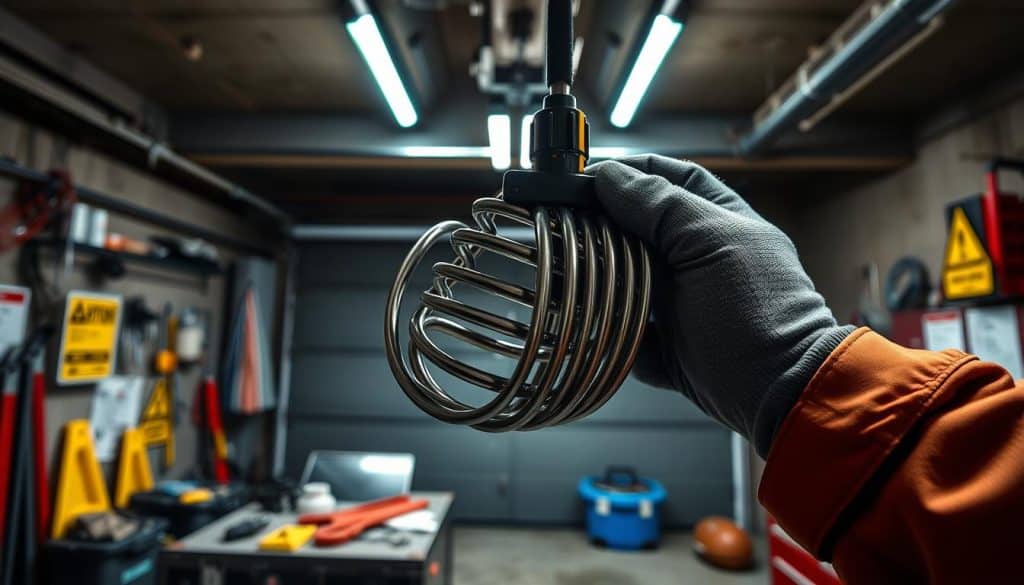
Before any hands-on work, unplug the opener and clamp the bottom of the door. These steps reduce unexpected movement and keep the work area steady.
- Use the right tools: only true winding bars, not screwdrivers or improvised rods.
- Secure the door: C-clamps or locking pliers on the track stop sudden drops.
- Wear PPE: eye protection and gloves, and keep bystanders clear.
Torsion springs sit above the opening and store torque; extension springs run along the track. Both hold heavy tension and can whip or spin if released incorrectly.
If you hear grinding, see frayed cables, or feel unexpected resistance, stop the process and call a professional. We prioritize safe, controlled tension release and will re-balance the door after we replace garage components. Call Garage Home Pros at (321) 200-0727 for same-day help across our service area.
Understanding Garage Door Springs: Torsion vs. Extension
Not all lifting systems use the same hardware; knowing which type sits above or beside the opening matters for safety and performance. We help you identify your setup quickly and recommend the safest, most reliable approach for your home.
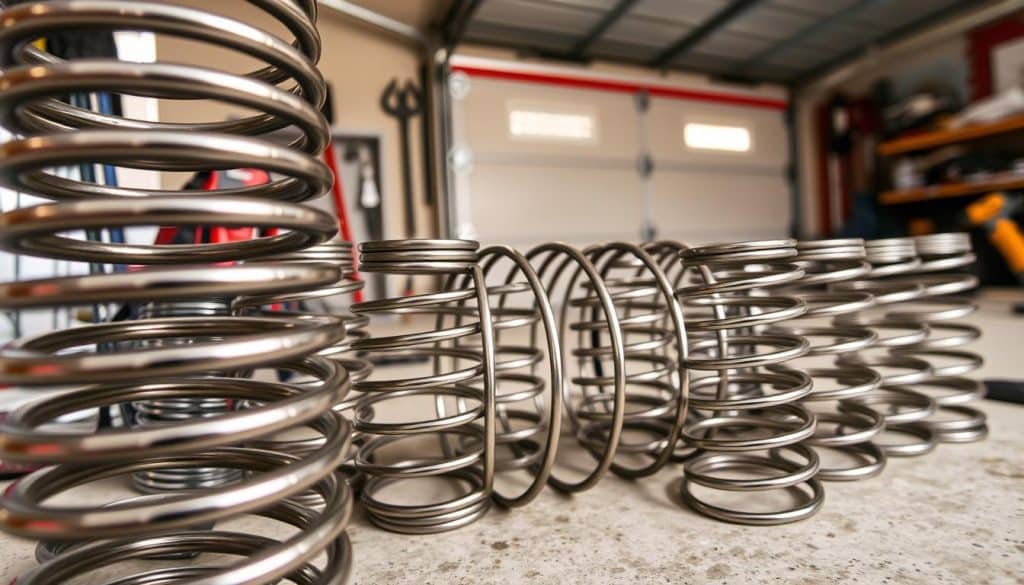
Torsion systems
Torsion springs mount on a shaft above the header and twist to generate lifting torque. They typically last 10,000–20,000 cycles and give smoother, quieter operation.
Extension systems
Extension springs run along the track and stretch under load. They generally last 7,000–10,000 cycles and can be noisier, making them common on lighter panels where cost matters.
- We identify torsion setups above the opening and explain how they work.
- We match the correct spring to door weight and width to ensure balance and opener longevity.
- We inspect drums, cables, and bearings so the system works in sync and lasts longer.
Choosing the right type protects the opener, reduces noise, and supports even travel. If needed, we may recommend dual torsion for oversized units to improve balance and lifespan.
Clear Signs You Need a Spring Replacement
Sharp noises, sudden failure to lift, or uneven travel are clear signs you should not ignore. We inspect quickly and act to protect your home and family.
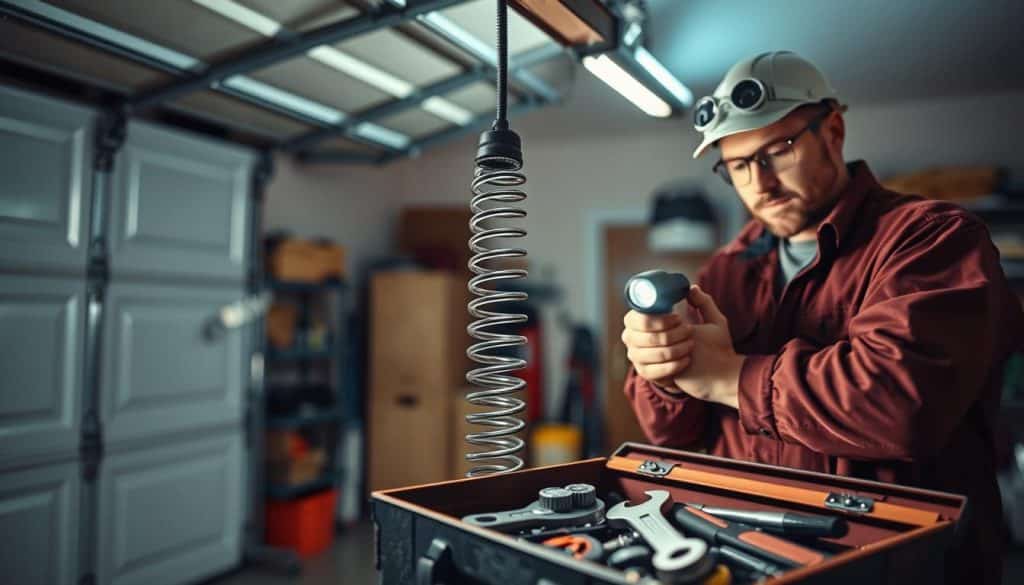
Loud bang, visible coil gap, and a door that won’t lift
If you hear a loud bang and the entry won’t move, that often means a broken spring and lost tension. A visible gap in a torsion coil or stretched extension parts confirms the problem.
Uneven movement, loose cables, and opener strain
Loose or tangled cables show the springs are no longer counterbalancing weight. The opener may hum or struggle without lifting because the system is out of balance.
- If travel is crooked or the panel tilts, failed or mismatched springs are likely.
- Continuing operation can cause further damage to tracks, hinges, panels, and the opener.
- We secure the entry, disconnect the opener, and follow a controlled procedure to fix the issue.
We confirm whether your setup uses torsion or extension so we bring the right parts. For fast service, call (321) 200-0727. We handle emergency calls Monday–Saturday with no after-hours fees.
Tools and Prep for a Safe Service Visit or DIY Assessment
Preparation is the difference between a smooth job and a dangerous one—so we bring the right gear and a proven process.
We arrive ready: safety glasses, gloves, C‑clamps or locking pliers, true winding bars, wrenches, tape measure, and a stable ladder. These items let us control tension and protect hardware.
Key tools and first steps
- Disconnect the opener and clamp the entry below the rollers before any work begins.
- Measure existing components: length, inside diameter, and wire size to match the correct part for your panel.
- Use the proper bars and measured turns when winding to set accurate tension.
- Verify cables, drums, bearings, track alignment, and hinges so new parts don’t fight worn components.
Prefer a pro? We can inspect, write a clear plan, or take over and safely replace parts on the spot. Call (321) 200-0727 to schedule service across Polk, Osceola, Lake, Orange, and Seminole counties.
Garage Door Spring Replacement: Step‑by‑Step Overview
We follow a clear, step-by-step process so the job finishes safely and on time. Our goal is to handle the full service in one visit when possible and to leave the system balanced and tested.
Securing the opening and disconnecting the opener
We start by unplugging the garage door opener, pulling the release, and clamping the panel beneath the rollers. This prevents sudden movement and protects the opener motor.
Releasing tension and removing the broken spring
Using proper winding bars, we control the winding and unwinding sequence. We only remove old coils and hardware after all stored tension is safely bled off.
For torsion springs we unwind measured turns. For extension systems we confirm safety cables and carefully relieve stretch before taking parts out.
Installing the correct spring, setting tension, and balancing the door
We install matched springs rated for your panel weight and width. Tension is set by measured turns and verified with balance tests at multiple heights.
After reconnecting the garage door opener, we test limits, force settings, and photo‑eyes. Final checks include manual lift tests and torqueing fasteners.
- Typical time: 1–2 hours depending on condition and parts.
- We check cables, drums, and bearings and replace worn parts as needed.
- We finish with a short care briefing so you know how to keep things running well.
For service, call (321) 200-0727 or email garagehomepros@gmail.com. We handle the entire sequence with safety and balance as our priority.
Why DIY Spring Work Is Risky and Often More Costly
Tackling a spring job yourself may seem like a cost saver, but one mistake can escalate quickly.
Springs store a lot of energy. A slip, the wrong tool, or a missed turn can cause serious injury and heavy damage to panels and openers.
DIY guides often skip nuance about high tension and how a minor error becomes dangerous. Makeshift tools can round set screws or slip from cones and create new problems that raise total repair costs.
- A miscounted turn can make the entry drift or slam, creating hazards.
- An unbalanced unit puts extra strain on the motor and shortens its life.
- Falling panels can dent vehicles and ruin tracks—costs that dwarf a professional visit.
- Professional service includes system inspection so hidden issues don’t get missed.
We bring the right tools, exact tension settings, and experience to finish the job safely and correctly the first time. When you add up time, risk, and callbacks, hiring a pro is usually the more economical choice.
We’re here when DIY turns risky. Call us Monday–Saturday for emergency service across Central Florida with no after-hours fees and quick, safety-first support.
Cost of Garage Door Spring Replacement and What Affects It
Clear pricing starts with a short inspection. We check unit type, wear, and any worn lift parts before we quote a job.
Typical price ranges
Torsion systems typically run $250–$450 including labor. Extension sets usually range $200–$350. High‑cycle options cost more, often $350–$600 for the upgrade.
What changes the final price
Size and weight matter. Heavier or wider panels may need dual coils or stronger parts, which raises cost.
Other items like cables, bearings, or drums add parts and labor. We itemize those so you approve only needed repairs.
Upgrades and long‑term value
High‑cycle components cost more up front but can last years longer and lower lifetime service needs. Professional installation ensures balance and protects the opener.
- Transparent ranges: we give a written estimate before work.
- Balanced system: we often recommend replacing both springs to reduce future repairs.
- Same‑day quotes: call (321) 200-0727 for availability Monday–Saturday with no after‑hours fees.
Maintenance Tips to Extend Spring Lifespan
Small, scheduled maintenance tasks deliver smoother operation and longer service life. Consistent care reduces strain on moving parts and keeps systems safer for your family.
Follow this simple schedule:
- Lubricate coils lightly every six months to cut friction and extend lifespan.
- Perform balance checks by lifting the panel halfway; if it drifts, schedule an adjustment.
- Inspect for rust, stretched coils, or visible gaps that can signal failing parts.
- Keep tracks clean and rollers moving freely to ease lift and improve overall operation.
Professional care matters: We recommend annual tune‑ups to catch worn cables, bearings, and drums before they fail. Replacing both components together keeps the system balanced and protects the opener.
If you hear persistent squeaks after lubrication, or notice uneven travel, call us. We offer annual tune‑ups and safety checks across Polk, Osceola, Lake, Orange, and Seminole counties. Call (321) 200-0727 to schedule.
When to Upgrade to High‑Cycle Springs for Heavy Use
High-traffic homes need stronger lifting components to avoid frequent service calls.
High‑cycle coils are rated from 25,000 to 50,000 cycles, compared with standard kits that typically last about 10,000 cycles. That extra life means fewer service visits and steadier balance for busy households.
Cycle ratings, smoother operation, and reduced maintenance
We recommend high‑cycle torsion springs when a family cycles the unit many times each day. These parts last years longer and lower total ownership cost.
- Smoother operation: fewer rebalances and less opener strain.
- Matched sizing: we size wire and length to your panel weight and target cycle rating.
- Extension options: we consider extension systems, but torsion upgrades are common for heavy use.
- Future changes: if you replace garage door panels or add insulation, we re‑match the parts to the new weight.
We’ll confirm opener settings after the upgrade to protect the motor and the entire system. Ask us for options that reduce maintenance without sacrificing safety or performance.
Local, Fast, and Friendly Help in Central Florida
Reliable service hinges on quick response, correct parts, and clear communication from the first call. We’re family‑owned and serving Polk, Osceola, Lake, Orange, and Seminole counties since 2014.
Hours: Mon–Sat 8:00 a.m.–9:00 p.m.; closed Sundays. We do not charge after‑hours fees. Call (321) 200-0727 or email garagehomepros@gmail.com for fast scheduling.
- We offer full-service repairs and professional installation for panels, openers, and operators.
- Stocked trucks and the right tools help us finish most jobs in a single visit.
- Emergency help is available during service hours for sudden failures or stuck entries.
- After each job we run complete safety checks and inspect the entire door system to confirm smooth operation.
- You’ll get clear options, upfront pricing, and courteous techs who leave the site tidy and safe.
Count on us for routine tune‑ups, complex repairs, and to replace garage components with matched parts that protect your opener and extend service life.
Conclusion
Timely service prevents small signs from becoming costly, dangerous failures. We follow a defined process: secure and disconnect, control tension with proper winding bars, remove old components, install new matched springs, and balance and test for smooth operation.
Our team explains the types — torsion or extension — and recommends upgrades when heavy use or longer lifespan is needed. Regular maintenance like light lubrication and balance checks reduces repairs and extends service life.
We’re local, responsive, and ready to help quickly and professionally. Call Garage Home Pros at (321) 200-0727 or email garagehomepros@gmail.com to restore safe, reliable performance today.