What Does a Garage Door Spring Do? Curious why a heavy panel lifts so smoothly with little effort? We answer that question clearly and simply
Springs counterbalance the weight of the panel so the opener or person can move it safely. Torsion springs sit above the opening on a shaft and wind to create torque. Extension springs run along the sides and work with cables and pulleys.
Many residential panels weigh hundreds of pounds. Properly sized springs make those heavy units feel light. An unbalanced system strains the opener and becomes a safety risk.
We are Garage Home Pros, family-owned since 2014. We provide fast, reliable repair and same-day solutions across Polk, Osceola, Lake, Orange, and Seminole counties. Call or email for friendly, professional service when your spring, cable, or track needs expert care.
Key Takeaways
- Springs store and release energy to lift heavy panels safely.
- Torsion springs sit above the opening; extension springs mount at the sides.
- Correct spring sizing prevents strain on openers and long-term damage.
- Broken springs or cables are safety risks—call trained technicians.
- Garage Home Pros offers fast, local service and no after-hours fees.
Understanding the Role of Garage Door Springs in Everyday Operation
Behind each reliable open and close cycle is a system that balances weight and motion. Springs counterbalance heavy panels so the opener or a person can move the unit safely and smoothly.
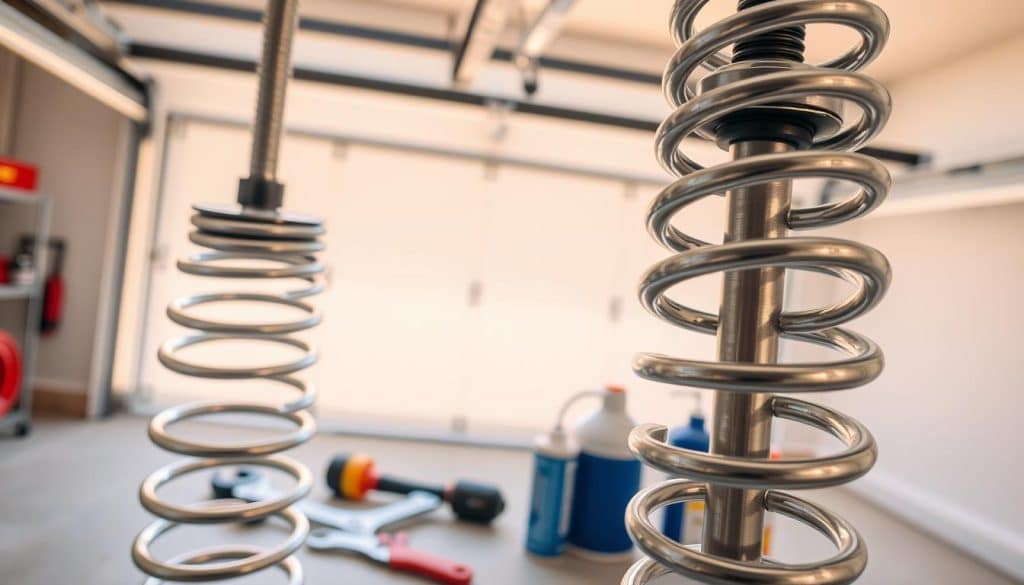
Torsion systems store energy by twisting on a shaft above the opening. They apply torque to cable drums so the bottom corners lift evenly. Torsion designs often give smoother, longer-lasting balance.
Extension systems stretch along the track sides. Coils work with pulleys and counterbalance cables to assist movement. These setups are common on lighter or older panels.
- When closed, springs store energy; as the panel lifts, they release it to ease the load.
- Visual cues: a horizontal bar above usually shows torsion; long coils near tracks indicate extension.
- Never adjust high tension yourself. Trained tools and techniques keep people and equipment safe.
If your opener struggles or the unit hesitates, contact us for a quick balance check. We provide dependable, customer-first service across Davenport and nearby areas.
what does a garage door spring do
Think of springs as the hidden helpers that make lifting effortless every time. They store energy when the unit is closed and return that energy during each open close cycle.
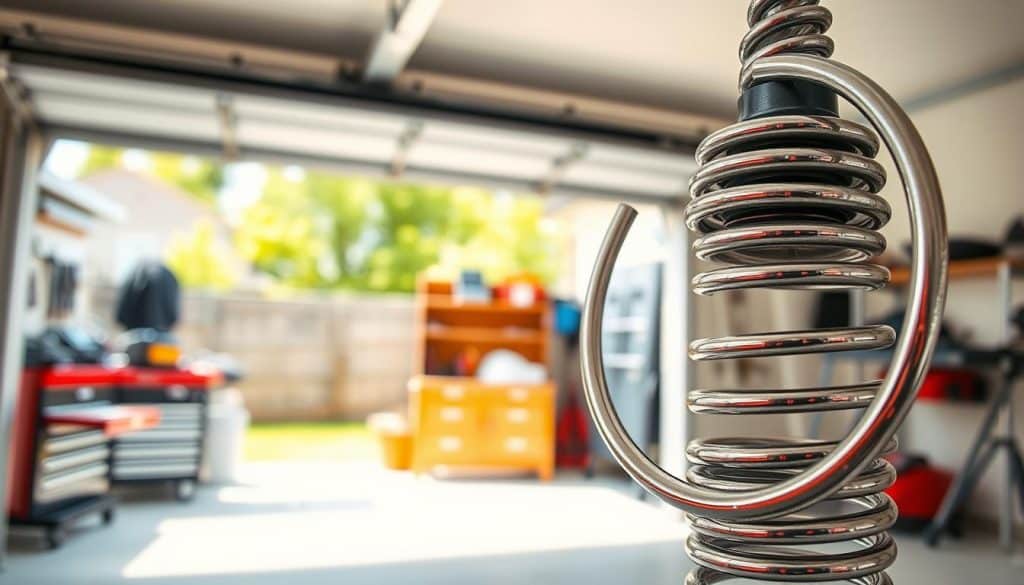
From stored tension to lifting force: how torque and stretch make doors move
Torsion coils twist on a central shaft. When they unwind, they apply torque to drums that pull cables and raise the panel evenly.
Extension springs stretch along side tracks. They contract through pulleys and cables to assist lift as tension releases.
- Springs store energy while closed and deliver lifting force when opened.
- Correct tension makes the unit feel neutral at mid-height and prevents drift.
- When springs do the heavy work, the opener simply guides movement and lasts longer.
- Mis-set tension can cause violent movement; proper setup keeps motion predictable.
- If the panel won’t stay halfway or feels heavy, schedule a balance test with us.
We offer fast inspections and professional tuning across Davenport and nearby areas. Call if you hear loud snaps or notice sudden changes in lift performance.
Torsion Springs vs. Extension Springs: Types, Locations, and Performance
Not all lift mechanisms work the same; identifying your setup helps predict performance and service needs. Below we map locations, action, and typical pros and cons so you can spot your system and know when to call us.
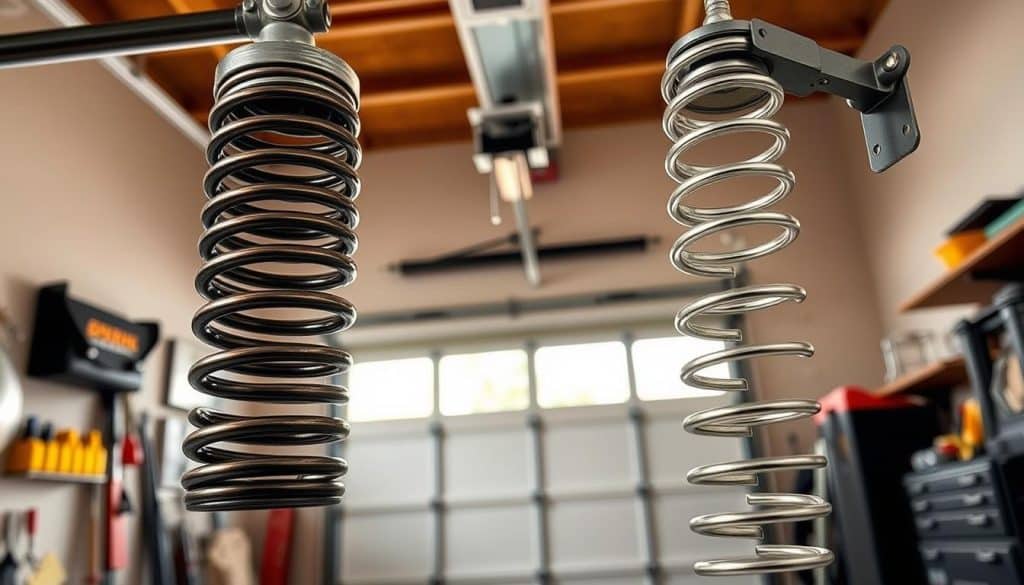
Torsion systems above the opening
Torsion assemblies mount on a shaft above the opening. They unwind to turn cable drums and lift evenly. This direct torque gives smoother travel and longer life for heavy panels.
Side-mounted extension setups
Extension units run beside the tracks. Coils stretch and contract through pulleys and cables. They work well on lighter panels but can feel less balanced than torsion designs.
When multiple springs are used
Heavier or wider units often need two or more torsion coils to share the load. Proper pairing based on door weight prevents premature wear and keeps motion predictable.
- Locations: above for torsion; along tracks for extension.
- Performance: torsion gives even lift; extension uses longer travel and pulleys.
- Maintenance: torsion usually needs fewer adjustments; upgrades can improve balance and reduce bounce.
If travel looks uneven or the unit feels heavy at mid-height, schedule a professional balance check. We’ll assess cable, drum, and spring pairing to restore safe, smooth operation.
The Garage Door Spring System and Its Partner Parts
Every balanced lift relies on more than the coil — several linked parts share the load and keep movement smooth. We help homeowners see the full picture so the opener and components last longer.
Key components include torsion springs on a shaft, cable drums, lift cables, anchor brackets, and end bearings. Each part must match the spring to lift and lower evenly.
- Drums and cables translate torsion into vertical motion and keep travel even.
- Shafts and bearings support rotation; anchor brackets secure the assembly.
- Openers rely on correct counterbalance — mismatched parts stress motors and gears.
Crisp sizing matters
Correct spring size — length, wire, inside diameter, and wind — is critical. Pros measure wire using 10‑ and 20‑coil checks to avoid error from paint or rust.
Both springs should be measured. Mixed wire sizes are common and shorten cycle life. Specialty systems such as EZ‑SET or TorqueMaster use different hardware and need expert measurement to order the right replacement.
Our recommendation: When we replace springs, we inspect cables, drums, and bearings, then provide precision sizing to protect your home and your opener.
Safety First: High Tension, Common Hazards, and When to Avoid DIY
High-tension components store lethal energy; safe handling starts with respect for that power. Releasing wound torsion or snapped coils can launch hardware and cause serious injury. We urge homeowners to step back and call trained help.
Both torsion and extension setups hide forces that can hurt people and damage property. Wound torsion holds torque on the shaft; if cones or set screws slip, the result can be violent.
- Extension springs and cable assemblies can snap back and cut or strike nearby people.
- Makeshift winding tools or loose pliers often slip and trigger uncontrolled movement.
- One error can cascade through cables, drums, and panels, multiplying harm.
For safety, call us at the first sign of failure—loud snap, visible gap, or a unit that won’t lift. Our team uses specialized bars, clamps, and step-by-step procedures to control tension and isolate hazards.
Do not pull damaged cables, loosen cones, or try to lift a stuck panel alone. We arrive prepared to secure the area, protect property, and restore safe operation with professional care.
Signs of Spring Problems and What to Do Next
Early signs of coil failure often show up as sound, rust, or odd movement. Catching these changes early keeps people and property safe.
Common warning signs
- Visible gap in torsion coils or rust flakes on springs.
- Loud snaps or a sudden bang during travel.
- A panel that feels heavy, won’t hold mid‑height, or slams closed.
Lifespan and timing for replacement
Standard residential springs last about 7 to 10 years or near 10,000 cycles. Heavy use shortens life. For busy homes, we suggest high‑cycle options to reduce frequent service and wear.
Why replace both at once
Swapping both units restores balance and lowers strain on the opener. Replacing just one often leads to a second failure soon after and extra repair time.
- Do not operate the opener with a broken spring; motor damage and cable derailment can follow.
- While you wait, keep clear of the path, don’t pull the release under load, and call for prompt repair.
We provide fast local service to diagnose, balance, and restore safe operation. We document our work and leave tips so you can spot early signs before they become urgent problems.
Care, Maintenance, and Pro-Level Adjustments for Longer Spring Life
Simple monthly steps help protect your investment and keep systems reliable. Small habits cut friction and let parts age more slowly.
Homeowner safe tasks: perform visual checks for rust, frayed cable, or uneven gaps. Lightly lubricate hinges, rollers, and coils with a silicone or lithium spray. Run a basic balance test: disconnect the opener, lift halfway, and see if the unit holds. If it drifts, call us.
- Monthly visual inspection for rust and frays.
- Light lubrication of rollers, hinges, and coils to reduce wear.
- Simple balance check with the opener released.
Professional-only work: setting torsion tension, replacing coils and cables, and measuring specialty systems like EZ-SET or TorqueMaster. These tasks need winding bars, calibrated measuring, and trained safety controls.
Seasonal changes affect tension and performance. Annual professional service inspects cables, drums, bearings, and verifies correct size, inside diameter, wire, and wind. For busy homes, consider high-cycle options to save time and visits.
We offer tune-ups and precision adjustments so your system stays safe and quiet year-round. Schedule annual maintenance to catch small issues before they become urgent repairs.
Fast, Local Help from Garage Home Pros
When a stuck unit threatens your schedule, fast local help matters most. We’re family-owned since 2014 and pride ourselves on clear communication and dependable work.
Emergency garage repairs with no after-hours fees Mon–Sat, 8:00 a.m.–9:00 p.m.
We offer emergency garage door repairs Monday through Saturday with no after-hours fees. Most spring replacements take about 1–2 hours, and we complete thorough balance tests before we leave.
Serving Polk, Osceola, Lake, Orange, and Seminole counties within a 20-mile radius
We respond fast across our service area to limit downtime. Technicians arrive stocked to finish most jobs in one visit and document work with clear safety instructions.
Call (321) 200-0727 or email garagehomepros@gmail.com for spring repair, cables, openers, installations
- Services: Garage Door Repair, Installation, Openers Repair & Replacement, Broken Springs Replacement, Repair Broken Cables, Doors Off Tracks, Residential and Emergency repairs.
- Transparent timing and price guidance: typical spring replacement ranges $350–$450; torsion often costs more but lasts longer.
- We match spring size precisely to your door and provide professional testing and follow-up.
Call us for same-day scheduling. We stand behind our work with friendly service and professional documentation to protect your home and restore safe operation.
Conclusion
A well-tuned counterbalance system protects your opener and prevents sudden failures.
Correctly sized and adjusted springs counterbalance the door weight. That keeps opening and closing smooth and safe. Torsion setups give balanced, durable performance. Extension setups still help with cables and pulleys when maintained.
Safety matters. High tension is dangerous. Adjustments and replacements belong to trained technicians who use proper tools and procedures.
Schedule routine checks and annual maintenance to spot wear before it becomes an emergency. For fast, friendly local service, call us Monday–Saturday, 8:00 a.m.–9:00 p.m. at (321) 200-0727 or email garagehomepros@gmail.com for garage door repair, spring replacement, torsion springs care, and more.